
Landscaping

Hostas are the backbone of shade gardens, but how you arrange them makes all the difference. These 10 layered hosta bed ideas transform dull corners into lush, year-round displays that attract pollinators and reduce maintenance.
Monochromatic Blue-Green Hosta Drift
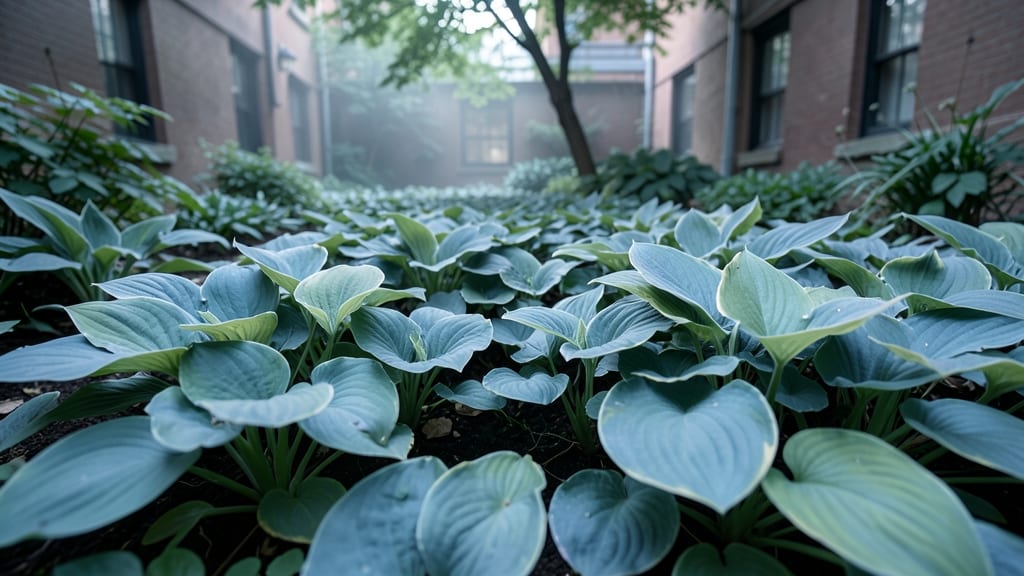
Transform a small urban space into a tranquil retreat with a monochromatic blue-green hosta drift—a design that blends 5-7 hosta varieties in varying shades of blue-green for a seamless, calming effect. This approach not only hides soil but also creates a cohesive look that feels intentional yet effortless, perfect for tight spaces where every inch counts.
Start with a mix of textures like the compact 'Blue Angel' and the larger 'Halcyon', paired with silver foliage such as lamb’s ear for contrast. Plant in a slightly staggered pattern to create depth, and use a thick layer of mulch (like shredded bark) to suppress weeds and retain moisture. This design thrives in partial to full shade, making it ideal for city balconies, courtyard nooks, or under trees.
Urban gardeners and small-space enthusiasts will love how this drift creates a serene focal point without overwhelming the area. The uniform color palette also makes maintenance easier—just watch for slugs and keep foliage trimmed for a polished look. 🌿
Sunburst Hosta Centerpiece Garden
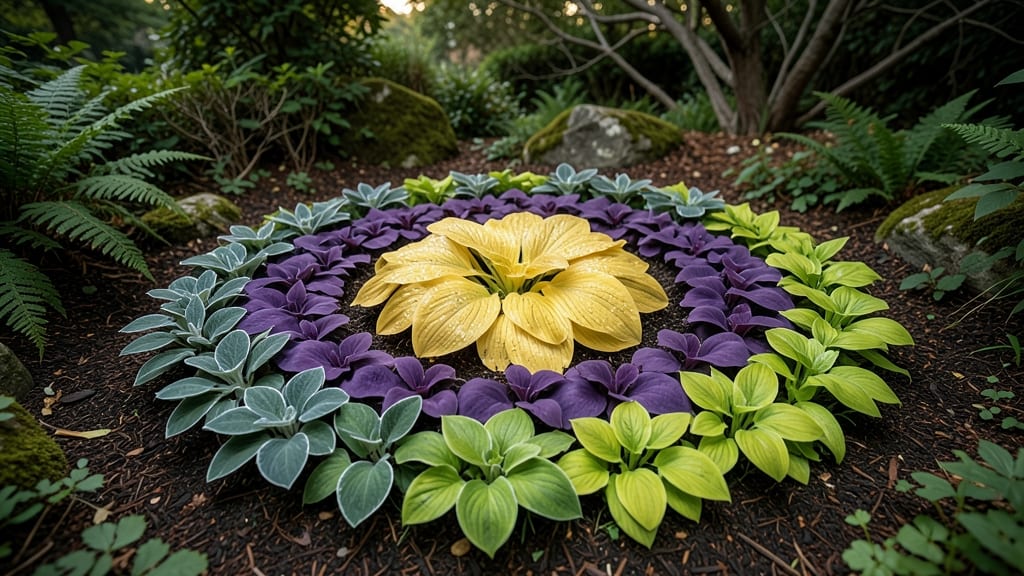
Turn a shady corner into a showstopper with a Sunburst Hosta Centerpiece Garden—where a golden 'Francee' hosta takes center stage and radiates outward in concentric rings of contrasting foliage. This design creates a natural focal point that draws the eye while adding drama to large, often overlooked shade areas.
Start with your star: plant 'Francee' in the heart of the bed for its vibrant golden-yellow leaves that glow in dappled light. Surround it with variegated varieties like 'Guacamole' (chartreuse centers) and 'Patriot' (blue-green with white edges) to create visual contrast. For depth, add deep green 'Blue Angel' or 'Halcyon' in the outer ring. Mulch with dark bark to enhance the natural patterns and suppress weeds—this garden thrives with just moderate watering and morning sun.
Perfect for gardeners who want to make a statement without the upkeep of high-maintenance beds, this design works beautifully in woodland gardens, courtyard focal points, or as a natural transition between lawn and garden borders. The concentric pattern creates a sense of movement that keeps the eye engaged all season long. ✨
Tiered Hosta Waterfall Design
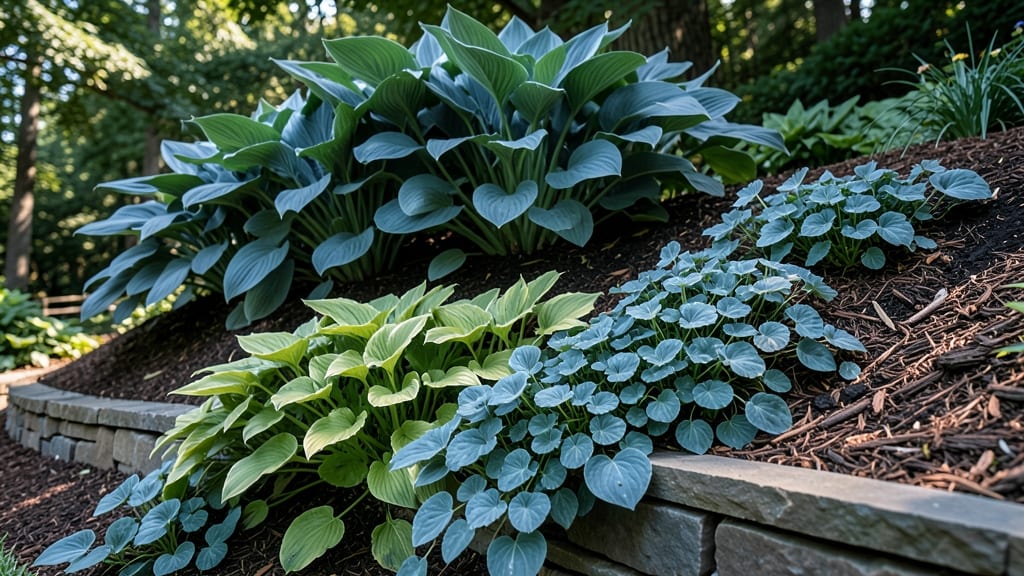
Turn a flat, boring shade garden into a dynamic waterfall with this tiered hosta design, perfect for slopes or retaining walls. The secret? Planting tall hostas like 'Sum and Substance' at the back—where they’ll anchor the look—then layering cascading varieties like 'June' and 'Blue Mouse Ears' to spill downward naturally.
Start by placing the tallest hostas against the highest point of your slope or wall, then work your way down with medium and dwarf varieties. Add moss-covered stones between layers for texture and to slow water runoff. This design thrives in partial to full shade and requires minimal maintenance once established—just water deeply during dry spells.
This approach is ideal for gardeners with sloped yards or limited flat space, creating a natural, cascading effect that draws the eye upward. Plus, the layered look adds drama without the upkeep of formal hedges. 🌿
Fragrant Hosta and Fern Combination
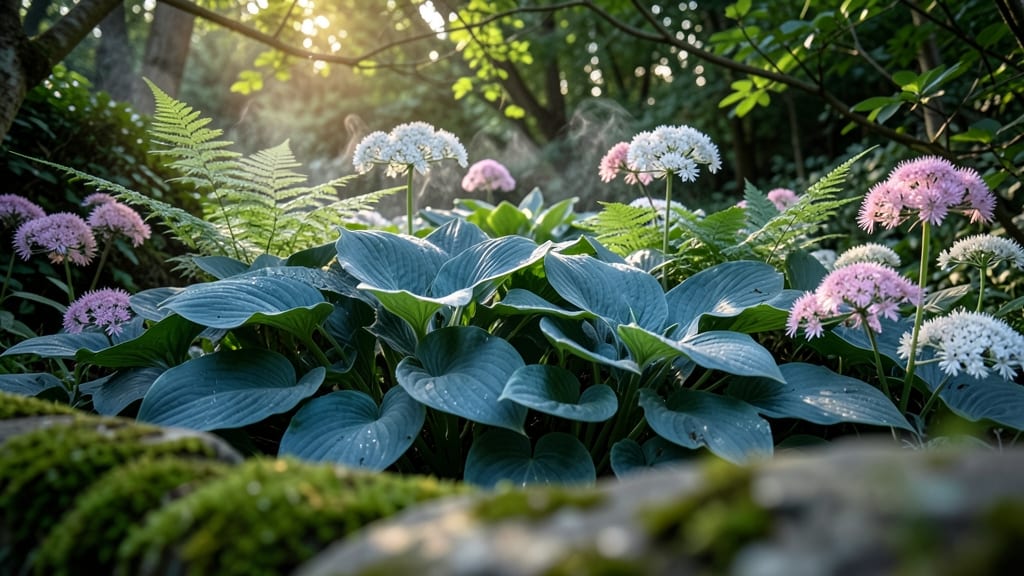
Transform your shaded garden into a fragrant sanctuary by combining scented hosta varieties like 'Francee' and 'Blue Angel' with delicate ferns and astilbes. This sensory-friendly design not only fills the air with subtle sweetness but also creates a lush, textured tapestry that thrives in low-light conditions.
The key is pairing fragrant hostas with Autumn Fern for soft, feathery contrast and purple astilbes for seasonal blooms. Plant hostas in clusters at the back for height, ferns in the middle for texture, and astilbes in front to draw pollinators like butterflies. Mulch with shredded bark to retain moisture and suppress weeds while enhancing the woodland charm.
This combination is perfect for gardeners who want a low-maintenance, multi-sensory experience without sacrificing beauty. The sweet fragrance and delicate foliage make it ideal for patios, woodland edges, or any spot where you crave a touch of nature's perfume. 🌿
Contrast Edging with Variegated Hostas
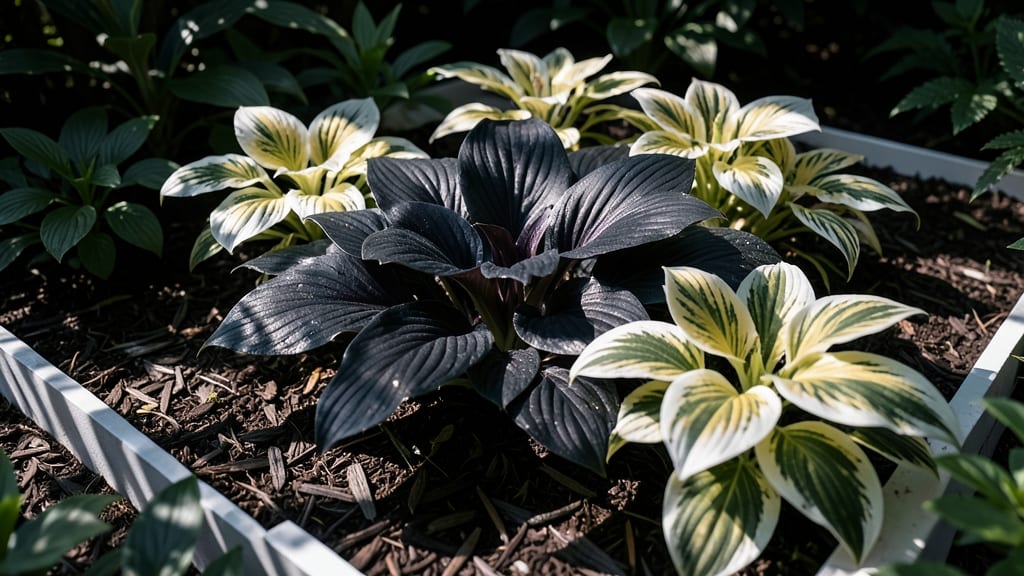
Dark corners of your garden don’t have to stay gloomy—variegated hostas are the secret weapon for adding instant brightness and definition. Plant white-edged varieties like 'Golden Tiara' along borders to reflect light and create a crisp, modern edge, while deep purple 'Black Satin' in the center adds drama and contrast.
This high-impact technique works best in shady or partially shaded areas where other plants struggle. Start by placing the lightest hostas closest to pathways or fences, then layer in deeper colors toward the bed’s center. Use black gravel mulch to enhance the contrast and keep weeds at bay—it’s a low-maintenance way to make borders pop.
Perfect for gardeners who love clean lines and bold contrasts, this design also thrives in urban spaces where light is limited. The result? A sharp, polished look that frames your garden like a living picture frame. ✨
Winter Interest Hosta Bed
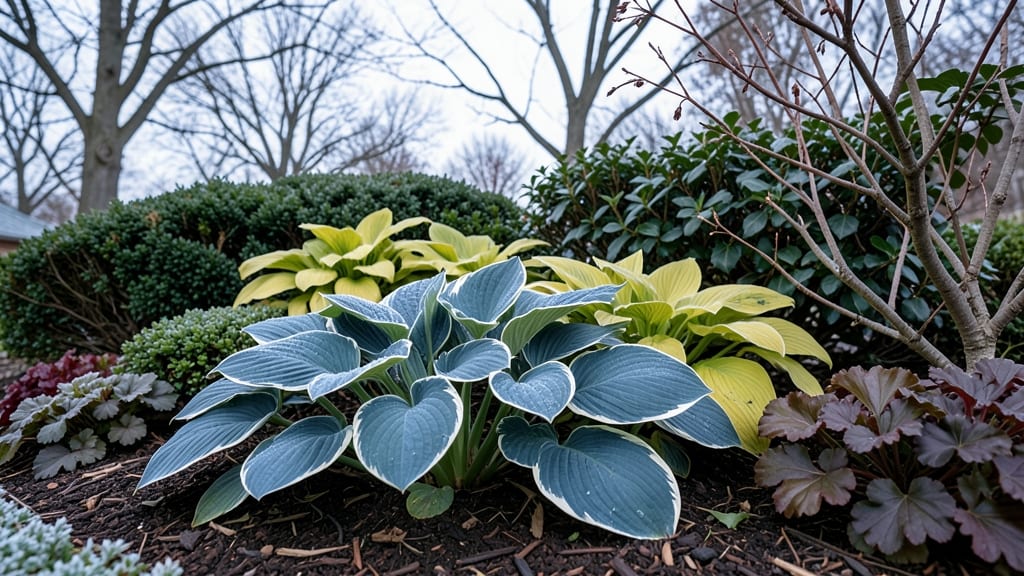
When winter strips most gardens bare, a winter interest hosta bed keeps your shade garden vibrant with structure and color. Unlike seasonal blooms, this design relies on persistent foliage like 'Patriot' and 'Halcyon' hostas, which hold their leaves through frost, paired with evergreen shrubs like boxwood or hemlock for year-round texture.
Start by planting boxwood or hemlock as a backdrop (3-4 feet tall) to anchor the bed, then layer hostas in varying sizes—tall varieties like 'Sum and Substance' at the back, medium like 'Patriot' in the middle, and low-growing 'Blue Mouse Ears' at the front. Use a textured mulch (like pine bark) to protect roots and add warmth to the design.
This approach is ideal for gardeners in cold climates or those who crave low-maintenance beauty without summer blooms. The evergreen shrubs provide a sturdy framework, while the hostas deliver soft color and movement even in winter’s quietest moments. ✨
Pollinator-Friendly Hosta Meadow
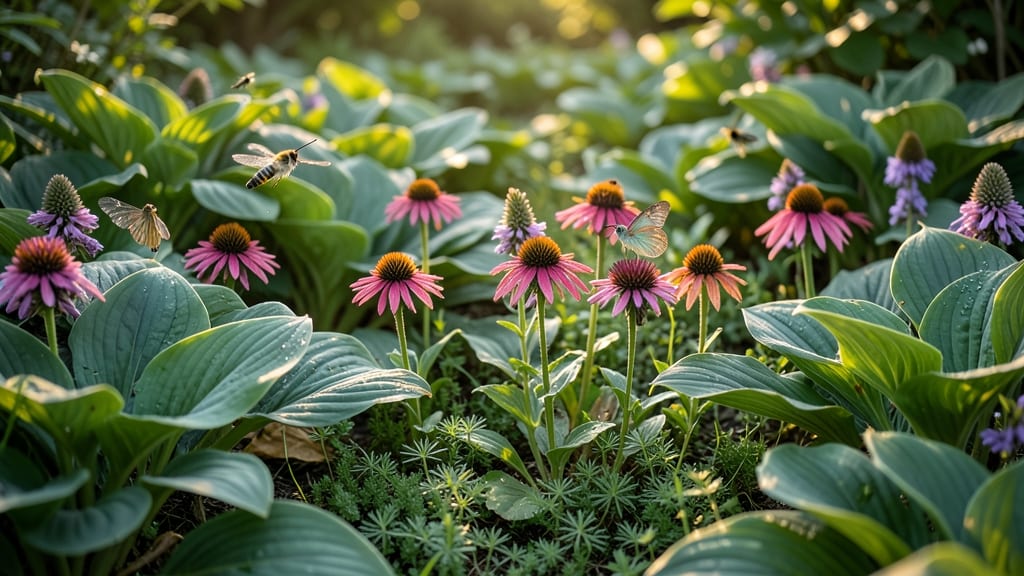
Turn your shade garden into a buzzing hub for bees, butterflies, and hummingbirds with a pollinator-friendly hosta meadow. This isn’t just another hosta bed—it’s a thriving ecosystem where native wildflowers like bee balm and coneflowers mingle with hostas to create a low-maintenance, wildlife magnet.
Plant June hostas or Halcyon as the foundational layer, then tuck in clumps of bee balm (for late-summer blooms) and purple coneflowers (drought-tolerant and long-blooming). The hostas provide lush greenery and shade for delicate wildflowers, while the flowers attract pollinators year-round. Mulch with wood chips to retain moisture and suppress weeds—this bed practically cares for itself.
Perfect for gardeners who want to support local ecosystems without extra work, this design thrives in partial shade and requires minimal upkeep once established. Watch your garden transform into a lively sanctuary for pollinators! 🌻
Container Hosta Arrangement
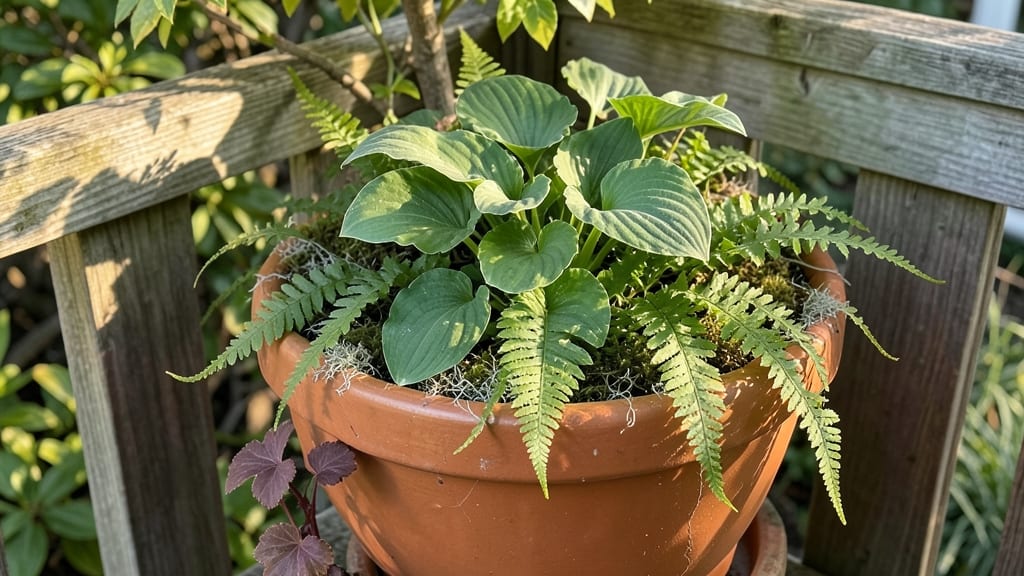
If you love hostas but don’t have a yard—or just want to bring their lush charm to patios and balconies—container arrangements are your secret weapon. Dwarf varieties like 'Pandora's Box' spill beautifully over pot edges, while trailing ferns add soft texture and movement, creating a mini woodland garden in just a few square feet.
Start with a large, sturdy container (at least 12 inches deep) filled with well-draining soil mixed with compost. Plant 3-5 hosta crowns per pot, spacing them evenly, and tuck in trailing ferns like Japanese painted fern or maidenhair fern to cascade over the sides. Water thoroughly after planting, then keep soil consistently moist but not soggy—containers dry out faster than in-ground beds. Place your arrangement in partial to full shade for the best foliage color and growth.
This setup is ideal for renters, urban gardeners, or anyone with limited space, offering the same lush aesthetic as a full hosta bed without the commitment. Plus, you can easily move pots to follow the sun or create seasonal displays. 🌿
Textural Hosta and Hostiphyllum Mix
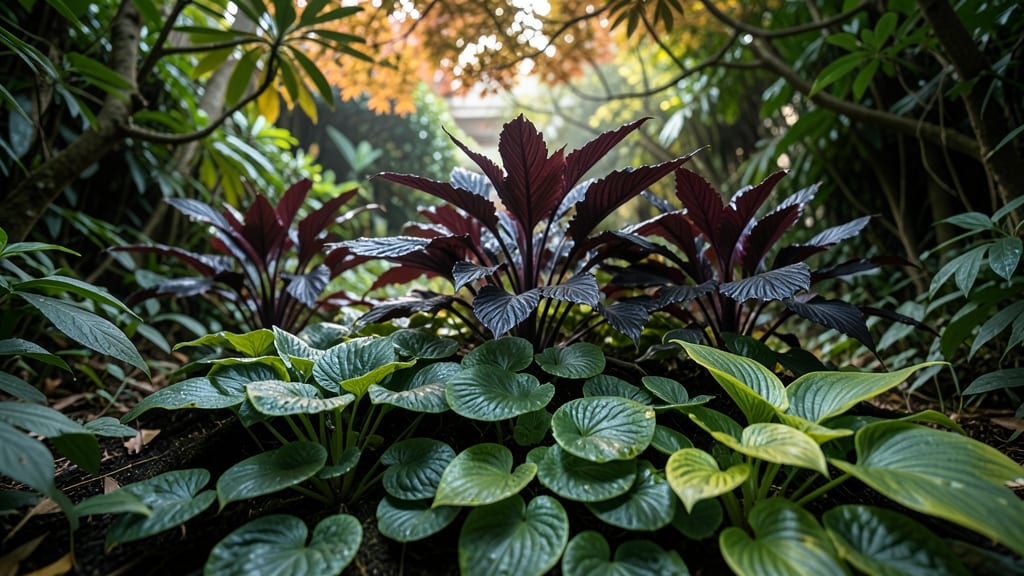
Transform your shaded courtyard into a tropical oasis by mixing hostas with hostiphyllums like 'Royal Standard'. This bold combo leverages the broad, wavy leaves of hostiphyllums to create a lush, almost jungle-like backdrop for hostas' classic rounded foliage—perfect for humid climates where moisture-loving plants thrive.
Start with large-leafed hostiphyllums (like 'Royal Standard') as your backdrop, then layer in hostas with varying textures—try 'Blue Mouse Ears' for compact, ruffled leaves or 'June' for bold, deep green foliage. The key is contrasting sizes: hostiphyllums add height (3-4 feet), while hostas fill in lower layers (1-2 feet). Mulch with pine bark to retain moisture and enhance the tropical vibe.
This design is ideal for gardeners in zones 5-9 who want drama without high maintenance. The glossy leaves reflect light beautifully, making even dark corners feel vibrant—plus, the mix naturally deters pests with its dense foliage. 💚
Low-Maintenance Hosta Ground Cover

Tired of spending weekends wrestling with weeds? Blue Mouse Ears and Lime Rickey hostas create a living mulch that crowds out weeds naturally while demanding almost no attention once established. These spreading varieties form a thick, velvety green carpet that thrives in partial to full shade.
Plant these aggressive growers 18-24 inches apart in moist, well-draining soil. Within a season, they’ll spread to fill gaps completely, reducing watering needs by up to 70% compared to traditional mulch. Their compact size (12-18 inches tall) makes them ideal for under trees or along foundations where other plants struggle.
Perfect for urban gardeners or anyone short on time, this approach eliminates weeding while adding year-round texture. Just divide clumps every 3-4 years to keep them vigorous. 🌱