
Flowers
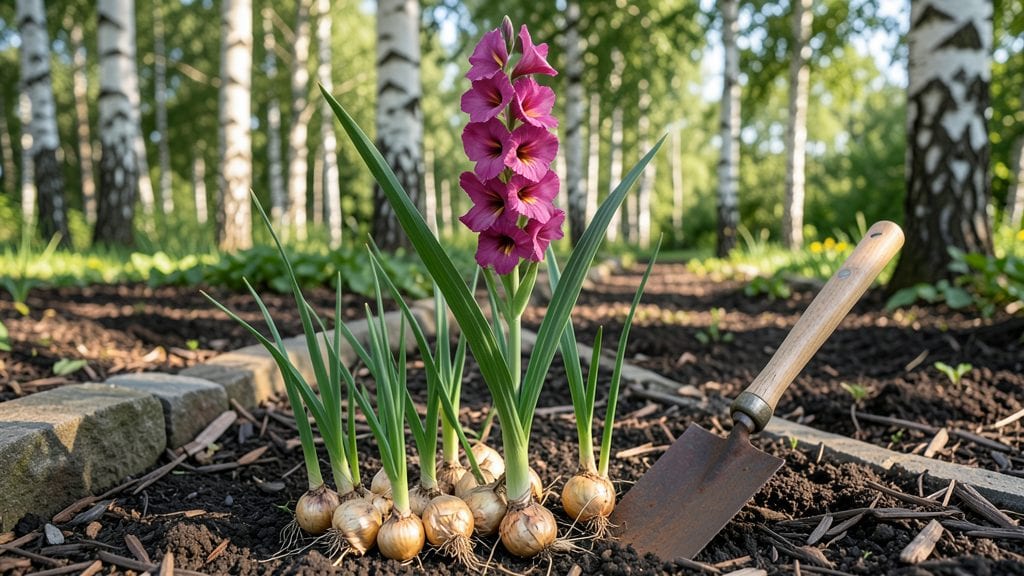
Gladiolus bulbs are technically perennial but are often grown as annuals because their corms can't survive freezing temperatures or harsh winters in most climates. Digging and storing them indoors lets you enjoy them for multiple seasons.
This isn't just a classification quirk—it's about survival. Gladiolus corms evolved in warmer climates where they naturally enter dormancy during dry seasons, but sub-freezing temperatures kill them quickly. 🌱 That's why gardeners in zones with cold winters typically treat them as annuals, replanting fresh corms each spring.
The good news? With proper storage, you can break this cycle and extend their life for years.
What's fascinating is how these bulbs adapt: their thick, fleshy corms store nutrients to fuel regrowth, but they lack the cold-hardiness of true perennials like daffodils. This makes them perfect for tropical and subtropical gardens where they'll reliably return year after year without intervention.
For cooler regions, the overwintering process becomes your secret weapon for long-term growth.
💡 In This Article
- How Gladiolus Corms Survive in Different Climates
- Step-by-Step Guide to Overwintering Gladiolus Bulbs
How gladiolus corms survive in different climates
Gladiolus corms thrive in warm climates because they evolved in subtropical and tropical regions where temperatures rarely drop below 40°F. Their survival strategy relies on natural dormancy cycles triggered by seasonal changes.
When temperatures fall or daylight shortens, the corm stops growing and enters a resting phase, conserving energy until conditions improve. This dormancy mechanism is similar to how onions or garlic bulbs behave, but gladiolus corms lack the protective layers that make these relatives cold-hardy.
The real vulnerability lies in their water content and cell structure. Gladiolus corms contain about 70-80% moisture when mature, which makes them highly susceptible to freezing. When water inside the corm cells crystallizes at 32°F or below, it ruptures cell walls, causing irreversible damage.
Even brief exposure to frost can kill the corm entirely—this is why gardeners in zones 6 and colder typically treat them as annuals. In contrast, true perennials like peonies have specialized tissues that prevent such ice damage.
Here's what happens biologically when temperatures drop: the corm's meristem (growth center) shuts down within 24-48 hours of freezing exposure. The plant's natural antifreeze proteins, which help other cold-hardy plants survive, are either absent or insufficient in gladiolus.
This explains why even well-established corms fail to return in cold winters. The good news? In USDA zones 8-11, gladiolus can overwinter in the ground naturally, multiplying each year without human intervention.
Climate also affects their growth cycle length. In warmer regions, gladiolus may bloom year-round with proper care, while in temperate zones, they follow a strict spring-to-fall growth pattern. The corms' ability to store starches (up to 20% of their dry weight) allows them to regenerate quickly in favorable conditions.
This storage capacity is why proper overwintering—through drying and cool storage—can preserve them for 3-5 years or more when handled correctly.
Consider this comparison: a gladiolus corm in zone 10 might produce 3-5 new corms annually from a single planting, while the same corm in zone 5 would die without protection. The key difference is the lack of winterkill protection in their native adaptations.
Even in mild winters, fluctuating temperatures can trigger premature dormancy or rot, making consistent overwintering techniques essential for long-term success.
What most gardeners don't realize is that gladiolus corms can actually regenerate from small fragments—even a 1-inch piece with an eye bud can grow into a new plant. This remarkable resilience explains why proper storage (at 40-50°F and 50-70% humidity) can extend their lifespan indefinitely.
The trade-off? It requires more effort than simply replanting annual corms each spring.