
Flowers
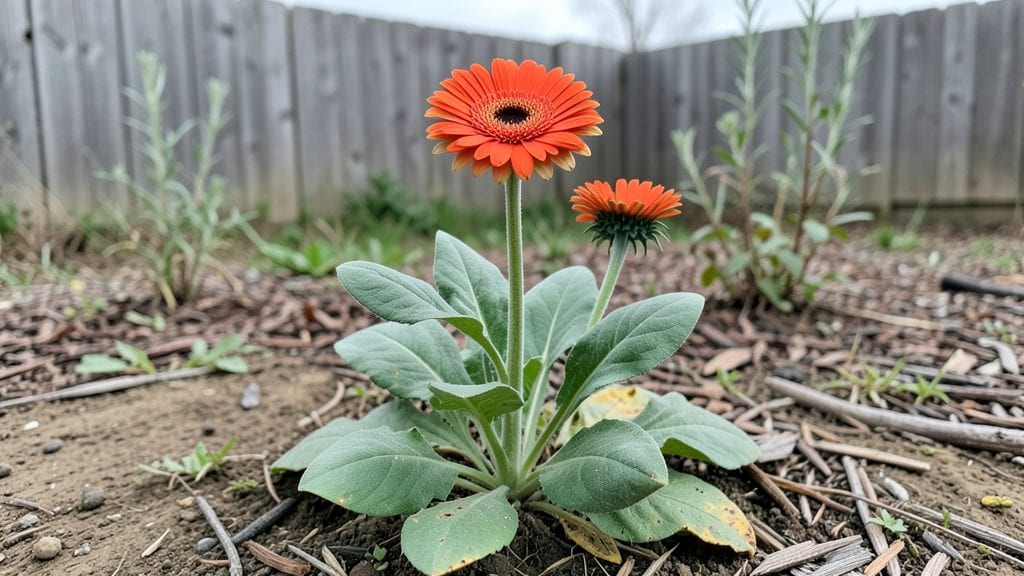
Gerbera plants are perennial in USDA hardiness zones 10-11, where they thrive year-round with proper winter care. In cooler zones (7-9), they die back annually but regrow from roots if protected or dug up. Zone 6 or colder requires treatment as an annual unless overwintered indoors.
Gerbera daisies naturally return each year in warm climates because their tuberous roots store energy for regrowth.
In cooler areas, these roots need protection from frost, which can kill foliage but not the root system if shielded properly. 🌱 The key difference between zones 7-9 and colder regions is how much insulation or indoor care these roots require—without it, they won't survive the winter at all.
For gardeners in marginal zones, container growing offers flexibility to move plants indoors when temperatures drop below 40°F.
What many don't realize is that gerbera tubers act like living batteries—storing nutrients until spring. This makes them surprisingly resilient if given the right conditions.
My own experience shows that even in zone 8, a thick layer of mulch can make the difference between a plant that returns and one that doesn't. The trade-off? More maintenance, but the payoff is seeing those vibrant blooms come back year after year.
💡 In This Article
- USDA Zones Where Gerbera Daisies Survive Winter
- Overwintering Gerbera Plants in Cold Climates
USDA zones where gerbera daisies survive winter
Gerbera daisies survive winter differently depending on their zone because their tuberous roots contain stored nutrients that can withstand cold—but only down to 20°F for brief periods. In zones 10-11, where winters rarely dip below 30°F, these roots remain active year-round, allowing foliage to persist.
The key mechanism is their natural cold tolerance: gerbera roots can enter a dormant state when temperatures drop, while foliage freezes back. This is why you'll see bare stems in winter but still get vibrant regrowth in spring.
In zones 7-9, the challenge shifts to protecting those roots from prolonged frost. A 4-6 inch layer of mulch (straw or shredded leaves) insulates soil, maintaining temperatures above 35°F—the threshold where root damage begins. Without this, even a single hard freeze (25°F) can kill tubers.
Container-grown gerberas in these zones face even greater risk: pots lose heat 30% faster than in-ground soil, so they need extra insulation or indoor relocation when nighttime temps hit 40°F.
The science behind this involves cellular dehydration—when temperatures drop, gerbera roots reduce water content to prevent ice crystal formation in cells. However, this process only works if the cold is gradual. Sudden freezes (20°F or lower) cause ice crystals to form instantly, rupturing cell walls.
That's why zone 10-11 gerberas thrive: their environment rarely experiences these rapid temperature swings. In contrast, zone 9 gardeners must monitor forecasts and act quickly when 32°F is predicted.
Here's what happens in colder zones: in zone 8, mulch alone may suffice if winters are mild, but a 5-7 inch layer is critical.
In zone 7, you'll need to dig up tubers and store them in 50-60°F conditions with 50% humidity—too dry, and they shrivel; too moist, and they rot. The root's survival hinges on maintaining this delicate balance.
For zone 6, even this isn't enough: tubers must be kept at 40°F or above, or they'll enter a fatal dormancy cycle.
What most gardeners overlook is how soil composition affects survival. Sandy soils drain too quickly, exposing roots to temperature extremes, while clay holds moisture that can lead to rot during thaw cycles. The ideal medium is loamy soil with 30% organic matter, which buffers temperature swings.
In containers, a mix of 50% peat moss and 50% perlite mimics this balance while improving drainage. This is why container gerberas in zone 9 often outperform in-ground plants during cold snaps—they're less susceptible to soil-borne diseases that thrive in saturated ground.
For those in transition zones (8b-9a), the difference between a 5-inch mulch and a 7-inch mulch can mean the difference between a plant that returns and one that doesn't. The extra 2 inches adds 5-7°F of insulation, potentially pushing soil temps from 28°F (lethal) to 33°F (safe).
This is why I recommend doubling down on mulch in marginal zones—it's the simplest way to extend a gerbera's natural hardiness by 2-3 zones.
Understanding these thresholds helps explain why gerberas in zone 10 bloom continuously while those in zone 9 may need a 6-8 week dormancy period before spring regrowth.
The root's ability to "bank" energy during cooler months is what makes them perennial—when you provide the right conditions, they'll keep coming back year after year. 🌿