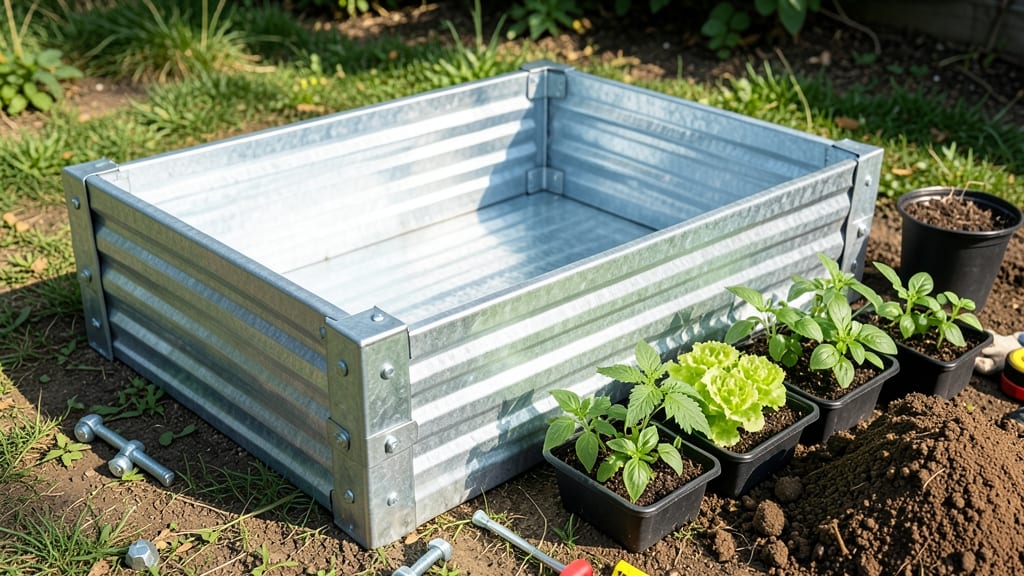
Buying guide: how to choose the right galvanized steel raised garden bed kit
1. Material Thickness and Gauge 💡
The gauge of your galvanized steel bed determines its durability and weight. Lower gauge numbers (like 24-gauge) mean thicker, heavier steel that resists warping and wind better—ideal for large or exposed gardens.
However, thicker steel is pricier and harder to move. Mid-range options (26-28 gauge) strike a balance, offering rust resistance without excessive weight. Counterintuitively, thinner steel (30-gauge) may suffice for small, sheltered beds but risks bending over time. Always check the galvanized coating thickness—double-galvanized kits last longer in harsh climates.
2. Assembly Complexity ⚡
Pre-drilled kits with included hardware (like corner brackets and screws) simplify assembly, often taking less than an hour. These are perfect for beginners or those short on time. Interlocking panel designs, however, eliminate hardware costs but may require more effort to align perfectly.
If you’re assembling multiple beds, prioritize kits with modular compatibility—some brands let you expand horizontally or vertically. Pro tip: Look for kits with clear, step-by-step instructions or video guides to avoid frustration.
3. Size and Scalability ✅
Your bed’s dimensions should match your space and gardening goals. A 4x8 ft kit maximizes planting area for vegetables, while 2x4 ft beds fit balconies or herb gardens. For large yards, consider expandable kits that let you add panels later.
Height matters too—6-12 inches is ideal for accessibility and drainage, but deeper beds (18+ inches) are better for root crops like potatoes. Measure your space carefully: Tight corners may limit assembly tools or require creative positioning.
4. Rust Resistance Features 🛡️
Galvanized steel’s zinc coating prevents rust, but quality varies. Powder-coated finishes add extra protection against scratches and UV rays, extending lifespan in sunny climates. For coastal areas or snowy regions, opt for double-galvanized steel—it has a thicker zinc layer.
Avoid kits with exposed screws or welds, as these corrode faster. A quick test: Scratch the coating lightly—if the metal underneath is visible, the rust resistance is weak. Premium kits often include weather-resistant sealants for added longevity.
5. Budget vs. Longevity 💰
Budget-friendly kits (30-gauge steel) start at entry-level pricing but may need replacing every 5-7 years. Mid-range options (26-28 gauge) offer the best balance, lasting 10+ years with minimal upkeep. High-end, heavy-duty beds (24-gauge) are a significant investment but withstand decades of use. Counterintuitively, cheaper kits often lack proper drainage holes or sturdy bases, leading to soil erosion or instability. Factor in long-term costs: A pricier bed may save you money on replacements, soil amendments, or repairs.
Frequently asked questions
Q: What makes galvanized steel the best material for raised garden beds?
A galvanized steel raised garden bed kit is ideal because the galvanized coating provides superior rust resistance compared to untreated metal or wood. Unlike cedar or redwood, which can rot over time, or plastic, which degrades under UV exposure, galvanized steel maintains its structural integrity for decades—even in wet or humid climates. The durability also means fewer replacements, saving you money long-term. For best results, pair it with a drainage layer (like landscape fabric) to prevent water buildup at the base.
Q: How do I choose the right size for my galvanized steel raised garden bed?
Size depends on your space and gardening goals. A 4x8 ft kit is versatile for vegetables, herbs, or flowers, while a 2x4 ft works for small balconies or starter gardens. For root crops (like potatoes), opt for 12+ inches deep; standard 6-10 inches suffices for most plants. Measure your area first—some kits require clearance for tools during assembly. If you’re unsure, modular kits (like the 4x12 ft premium choice) let you expand later.
Q: Is assembly difficult, or can I do it myself?
Most galvanized steel raised garden bed kits include pre-drilled holes and hardware, making assembly straightforward—even for beginners. Kits with corner brackets (like the mid-range 4x8 ft option) take under an hour with basic tools (screwdriver, drill). For interlocking designs (like the budget-friendly 3x6 ft kit), no extra hardware is needed, but alignment takes more precision. Always level the base (gravel or pavers work well) to prevent sagging over time.
Q: How do I prevent rust on my galvanized steel garden bed?
While galvanized steel is rust-resistant, scratches or exposed screws can accelerate corrosion. To protect your bed:
- Use powder-coated finishes (found in premium kits) for extra UV/scratch resistance.
- Avoid sharp tools when assembling to prevent coating damage.
- Apply a clear weatherproof sealant annually in harsh climates.
- Check corner brackets and screws yearly—replace any rusted hardware immediately. Most mid-range and high-end kits include double-galvanized coatings, extending lifespan even further.
Q: Can I use a galvanized steel raised bed for year-round planting?
Yes! Galvanized steel’s durability makes it perfect for year-round use, but drainage and insulation are key. In cold climates, add mulch or straw to protect roots. For winter planting, ensure the bed has proper drainage holes (most kits include them) to prevent waterlogging. If you’re growing in hot summers, place the bed in partial shade to reduce soil temperature extremes. The thicker steel (like 24-26 gauge) also resists warping from seasonal temperature shifts.
Q: What’s the difference between a galvanized steel bed and a cedar one?
Galvanized steel outlasts cedar (which rots in 5-10 years) and resists pests, warping, and weathering. However, cedar is lighter and cheaper upfront, while steel requires more tools for assembly. Steel beds also don’t need staining/sealing, saving long-term maintenance. If you prefer cedar’s natural look, consider a hybrid kit (some brands offer cedar panels with steel frames). For low-maintenance durability, steel is the clear winner—especially in humid or coastal areas where wood deteriorates faster.
Q: Are galvanized steel raised beds worth the investment?
if you prioritize longevity and low maintenance. A mid-range galvanized steel kit (like the 4x8 ft best overall) costs more upfront than cedar but lasts 10+ years with minimal upkeep. Over time, you’ll save on replacements, pest treatments, and repairs. For commercial or large-scale gardens, the high-end 4x12 ft kit is a smart investment—its double-galvanized coating and reinforced brackets handle heavy loads and harsh weather. Even budget-friendly options (like the 2x4 ft kit) offer better value than wood in the long run.