
Flowers
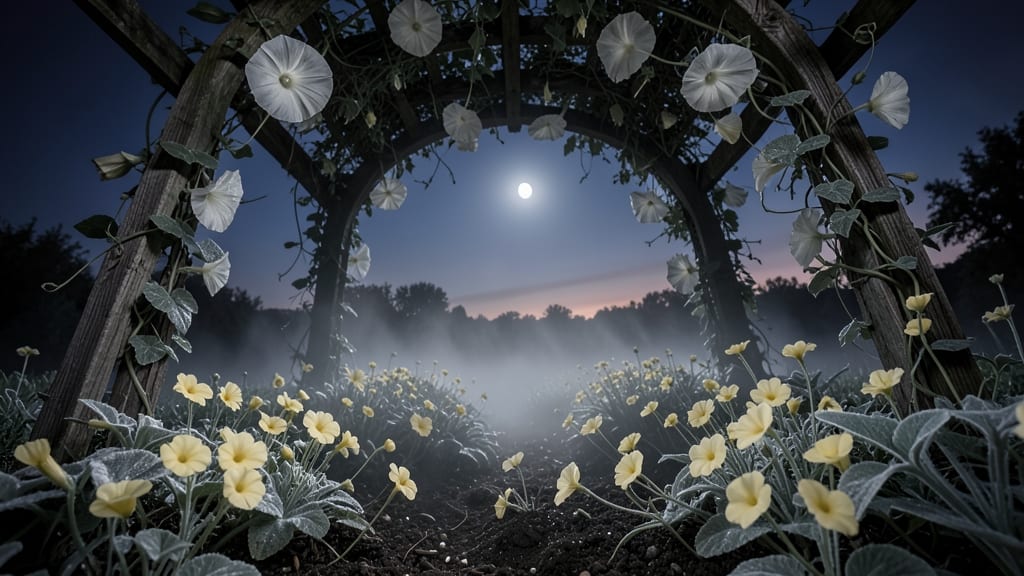
Transform your garden into a pollinator paradise with these 10 carefully curated flower bed plans. Each design ensures year-round blooms while supporting bees, butterflies, and hummingbirds—perfect for both beginners and experienced gardeners.
Sunny Border Pollinator Paradise
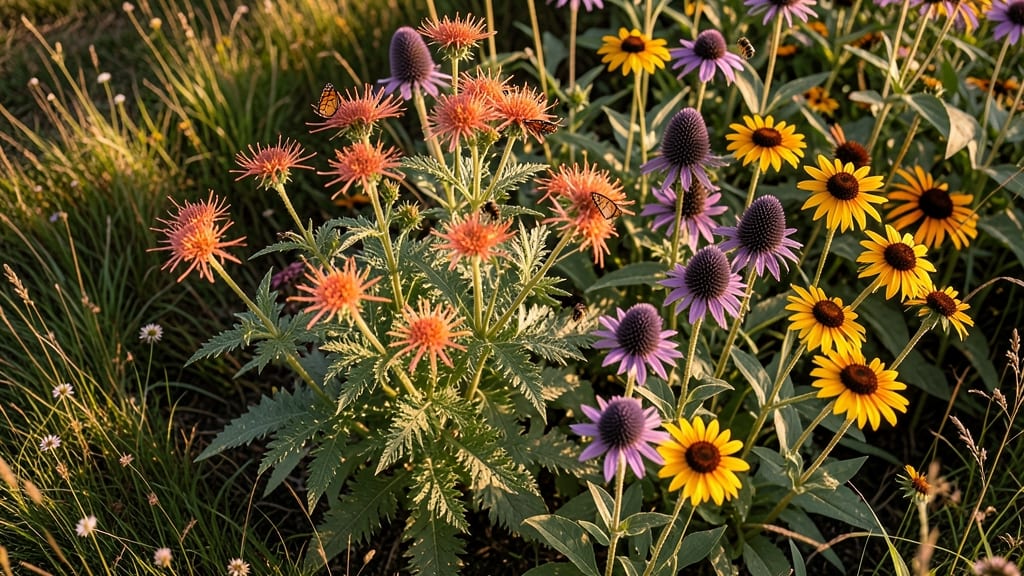
Turn your sunniest garden corner into a buzzing haven for monarchs and bees with this low-maintenance pollinator powerhouse. This design combines butterfly milkweed (the monarch's must-have host plant), purple coneflowers (a bee favorite), and golden black-eyed Susans for a three-season color show that keeps pollinators visiting from June through October.
Start by planting three milkweed stems at the back for height, surrounded by five coneflowers spaced 18 inches apart, and fill the front with nine black-eyed Susans for a cascading effect. All three thrive in 6 hours of sun and well-draining soil, with milkweed's deep roots reducing competition for water. After the first year, these perennials will spread naturally, creating a self-sustaining ecosystem that requires only occasional deadheading to keep blooms coming.
This plan is perfect for gardeners who want instant impact without the upkeep—ideal for sunny borders, foundation plantings, or even large containers. Watch your garden transform into a stopover for migrating monarchs while providing nectar for local bees. 🌻
Shade-Loving Woodland Wildflowers
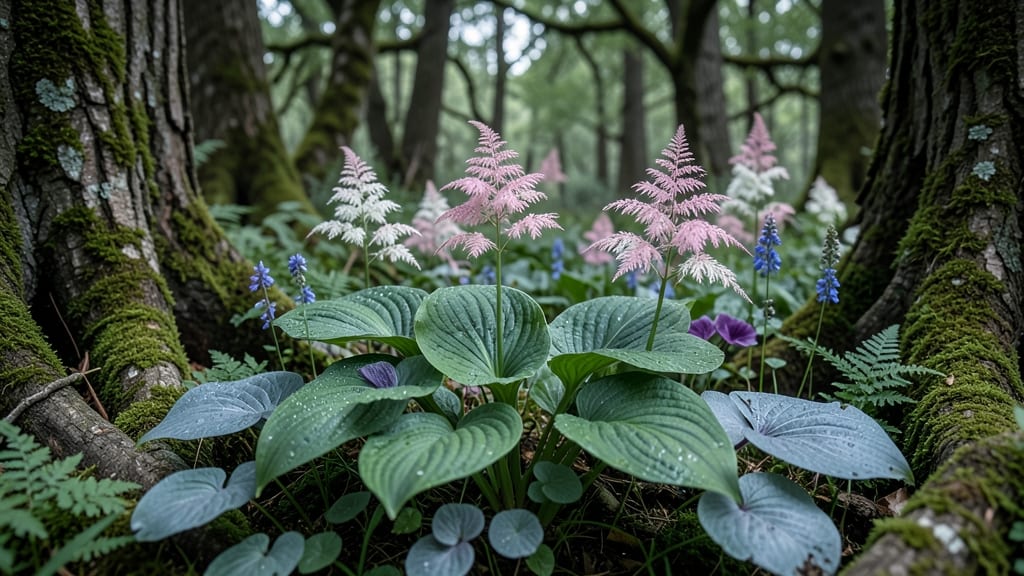
Tired of struggling with bare spots under trees or in shady corners? This shade-loving woodland wildflower design transforms neglected areas into lush, colorful havens with minimal effort. The key trio—hostas for bold foliage, astilbes for feathery plumes, and lungwort for textural interest—thrives in partial to full shade, making it ideal for north-facing beds or tree canopies.
Start by planting hostas (like 'Blue Angel' or 'Halcyon') as your foundation—their large leaves create a dramatic backdrop. Add astilbes (pink or white varieties) for airy summer blooms that dance in the breeze, followed by lungwort (with its striking silver-blue foliage and delicate flowers) for late-season color. These perennials are low-maintenance and deer-resistant, perfect for gardeners who want beauty without the upkeep.
This design is especially great for urban gardeners with limited sun or those looking to extend their garden's growing season. The combination of textures and colors ensures your shade garden stays vibrant from spring through fall. 🌿
Butterfly Magnet Cottage Garden
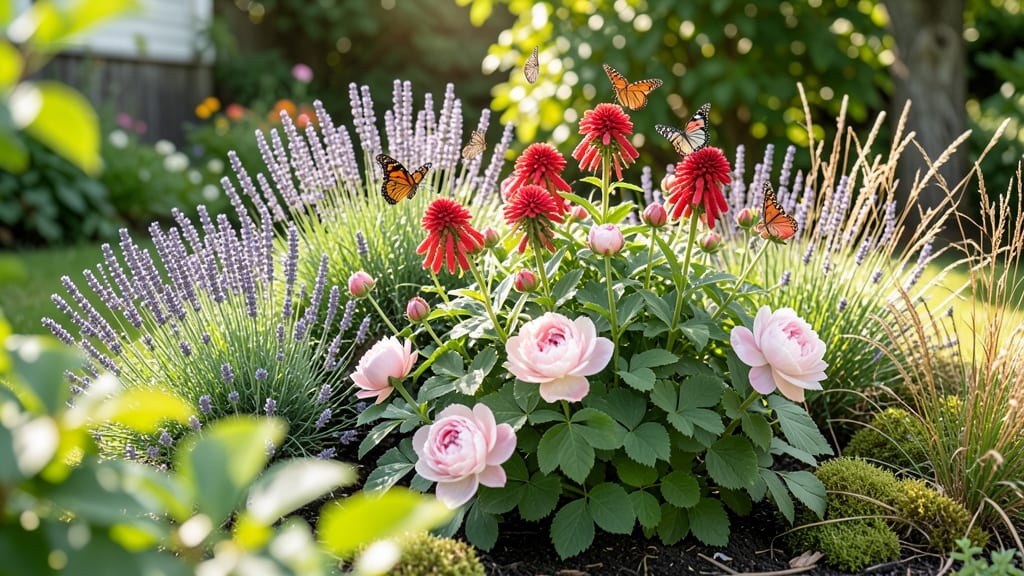
Step into a storybook garden where every bloom whispers to butterflies—this cottage-style bed marries old-world charm with modern pollinator power. The secret? A trio of fragrant, nectar-rich plants that create a vertical feast for fluttering visitors while filling your space with intoxicating scents.
Start with lavender at the front for its silvery foliage and intoxicating fragrance, then layer in tall hollyhocks (in soft pink or white) for their dramatic height and butterfly magnetism. Top it off with catmint, whose airy spikes attract bees and butterflies while repelling pests. Space plants 18-24 inches apart in well-draining soil and deadhead spent blooms to encourage continuous summer color.
This design thrives in full sun to partial shade and requires minimal maintenance—ideal for gardeners who love romance without the fuss. Perfect for cottage-style homes, small urban yards, or as a charming border for any garden. 🌻
Low-Maintenance Ground Cover Beds
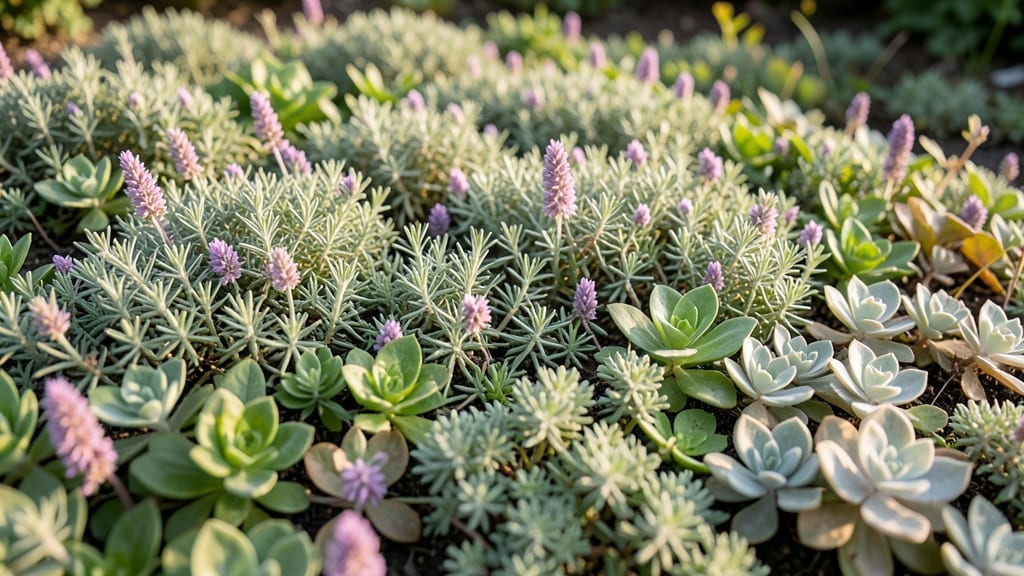
Tired of spending weekends battling weeds in your flower beds? A low-maintenance ground cover trio of creeping thyme, ajuga, and sedum creates a living carpet that chokes out weeds while adding color and texture. These hardy perennials spread aggressively (but controllably) to form dense mats, leaving you with a neat, green surface that requires only occasional trimming.
Start with creeping thyme for its fragrant foliage and early spring blooms, then add ajuga (with its striking purple foliage and blue flowers) for mid-season interest. Top it off with sedum varieties like 'Dragon's Blood' for late-season color that pollinators adore. All three thrive in full sun to partial shade and need only average watering once established.
This design is perfect for urban gardeners with limited time or those who want to reduce mulching and weeding chores. The combination creates a pollinator-friendly haven that stays lush from spring through fall with almost no effort. 🌿
Seasonal Color Wheel Design
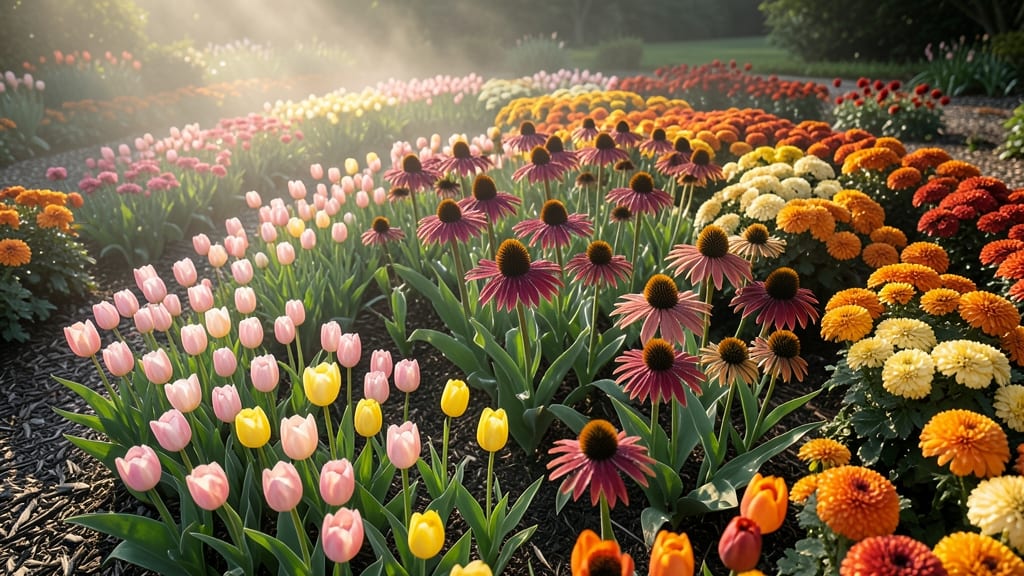
Say goodbye to seasonal gaps in your flower beds—this rotating color wheel design guarantees blooms from March through November with zero dead zones. The secret? Strategic layering of spring tulips, summer coneflowers, and fall mums, each positioned to peak at different times while supporting pollinators year-round.
Begin with tulip bulbs planted in early fall (varieties like 'Darwin Hybrid' for height and 'Fosteriana' for early color) at the front. Layer in coneflowers (Echinacea purpurea) behind them for mid-summer blooms, then add mums (Chrysanthemum 'Mammoth' series) at the back for autumn flair. All three thrive in full sun to part shade and average garden soil—just ensure good drainage for tulips. The result? A self-sustaining pollinator magnet that never looks bare.
This plan is ideal for first-time designers or gardeners who want effortless seasonal interest. The rotating blooms create natural movement in your garden while keeping bees and butterflies fed from spring through fall. 🌷
Native Prairie Restoration Bed
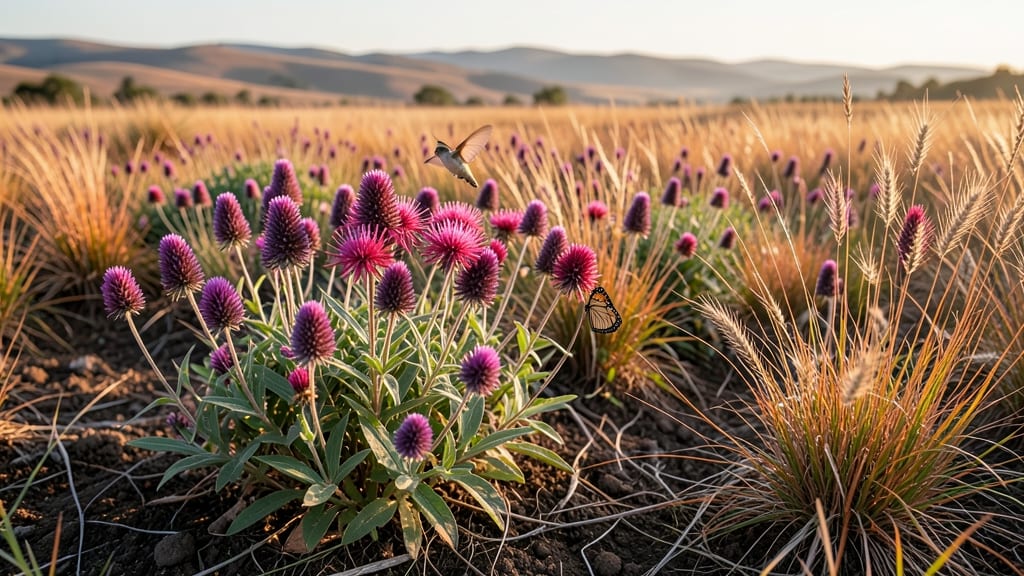
Skip the fertilizers and fancy soil amendments—this native prairie restoration bed thrives on what nature provides while creating a thriving ecosystem. By planting purple prairie clover (a nitrogen-fixer) and blazing star (a hummingbird magnet) alongside native grasses like little bluestem, you'll create a self-sustaining meadow that supports local wildlife while requiring zero chemical inputs.
Start by clearing the area and mowing down existing vegetation, then scatter seeds in late summer or early fall when conditions are ideal. These plants love poor, rocky soil and full sun, making them perfect for neglected corners or slopes where other plants struggle. Once established, they'll spread naturally, creating a drought-resistant landscape that flourishes with minimal watering.
This design is ideal for eco-conscious gardeners or those restoring degraded land—it supports pollinators, reduces erosion, and creates habitat for native birds and butterflies. Plus, it's one of the most low-maintenance options available. 🌱
Vertical Pollinator Tower Garden
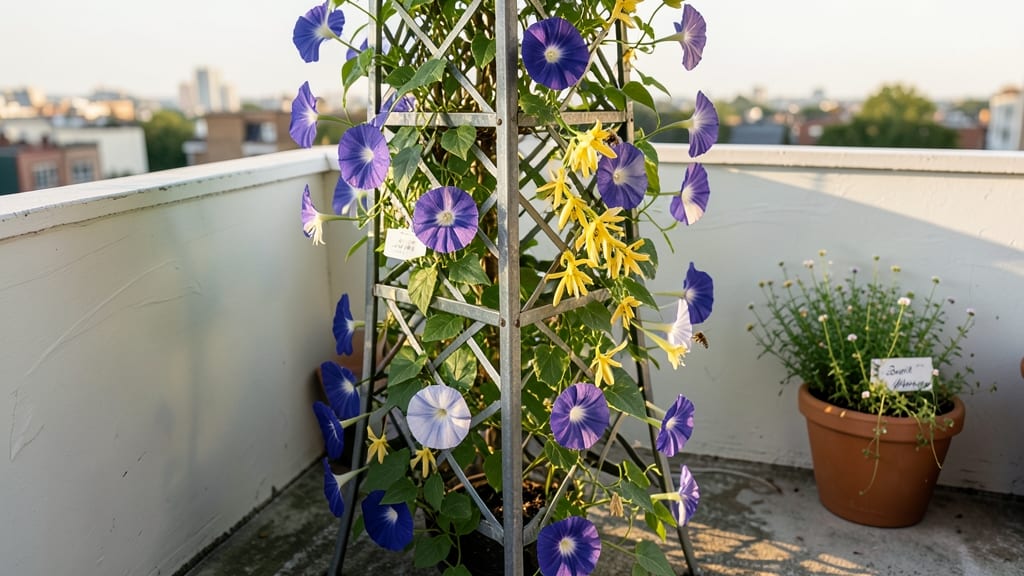
Turn even the tiniest balcony or urban patio into a buzzing vertical paradise with this pollinator tower garden—where vines become the structure and flowers become the decor. By training clematis, honeysuckle, and morning glories up a sturdy trellis or obelisk, you create a living magnet for bees, butterflies, and hummingbirds while adding dramatic height to your space.
Start with clematis (like 'Jackmanii' for purple blooms) at the back of your trellis for its strong climbing habit and late-summer flowers. Weave in honeysuckle (sweetly fragrant and loved by hummingbirds) mid-height, followed by morning glories (annual but fast-growing) at the front for early-season color. All three thrive in full sun to partial shade and need minimal soil prep—just ensure good drainage and occasional watering during dry spells. Prune clematis in early spring and deadhead spent blooms to encourage continuous flowering.
This design is perfect for urban gardeners with limited ground space or anyone who wants to add architectural drama without sacrificing pollinator support. The vertical structure also makes it easy to place in corners or along fences, turning overlooked areas into vibrant, functional art. 🌱
Drought-Tolerant Desert Bloom Plan
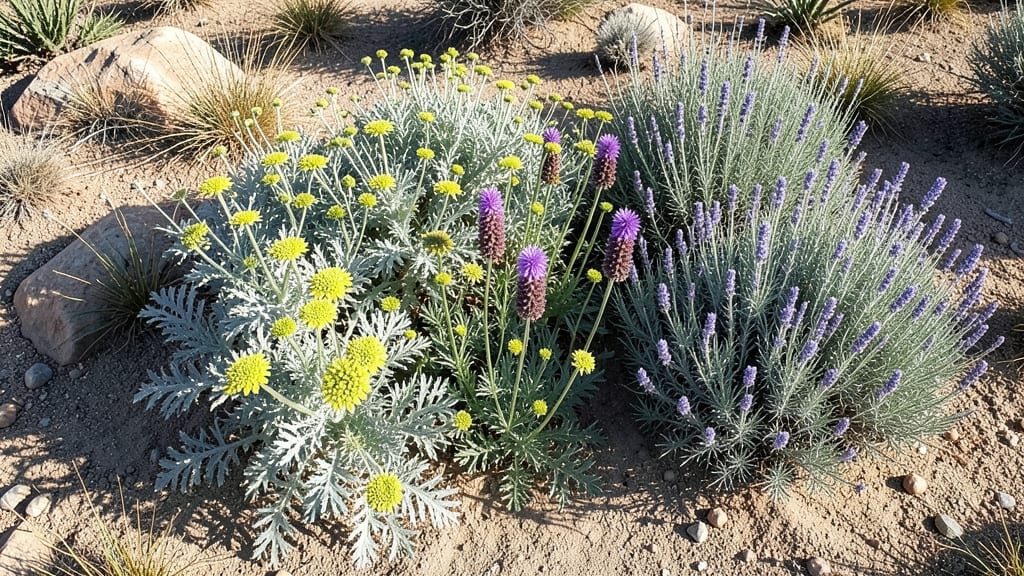
Turn your water-guzzling garden into a thriving desert oasis with this zero-waste, pollinator-powered design that thrives on one deep watering per week. The secret trio—silver yarrow (Achillea), beebalm penstemon (Penstemon spectabilis), and Russian sage (Perovskia)—creates a drought-resistant tapestry that hums with activity from hummingbirds to native bees, all while requiring no summer irrigation once established.
Start by planting three Russian sage at the back for their airy, lavender-blue spikes (they grow 3-5 feet tall), then add five penstemon in jewel-toned reds or purples spaced 18 inches apart for mid-height drama. Fill the front with seven yarrow varieties for their fern-like foliage and flat-topped yellow blooms. These plants adore full sun and poor soil—amend with just a little compost before planting, then let nature take over. Their deep roots outcompete weeds while storing moisture efficiently.
This plan is a game-changer for urban desert gardeners or anyone in USDA zones 5-9 with limited water access. The combination of textures and colors creates year-round interest while supporting specialized desert pollinators that struggle to find food in conventional landscapes. Plus, the fragrant foliage deters pests naturally. 🌻
Children's Sensory Flower Garden
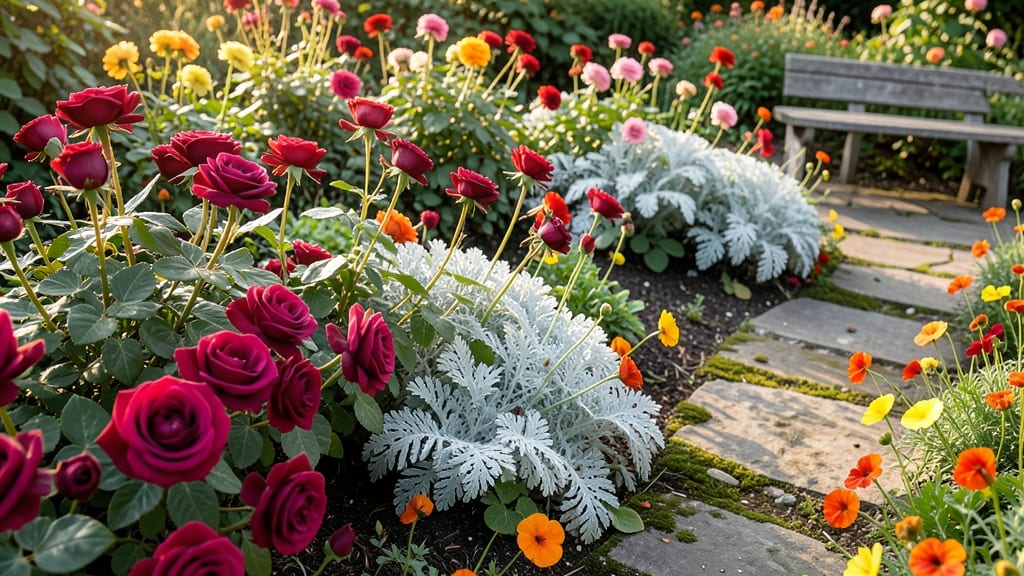
Turn your backyard into a kid-friendly playground where little hands can explore textures, scents, and safe-to-touch blooms. This sensory flower garden combines fragrant roses (like 'Bonica' or 'Knock Out' varieties), velvety lamb's ear (Stachys byzantina), and bright nasturtiums (edible and non-toxic) to create a multi-sensory experience that sparks curiosity and learning.
Start by planting three rose bushes (18 inches apart) at the back for height and fragrance, surrounded by six lamb's ear plants (12 inches apart) for their soft, silver foliage that kids love to pet. Fill the front with nine nasturtiums (spread 6 inches apart) for their peppery leaves and cheerful orange blooms. All three thrive in full sun to part shade and well-drained soil, with roses needing occasional pruning to encourage more blooms. The nasturtiums even produce edible flowers, making this garden both beautiful and functional!
This design is perfect for parents, teachers, or community gardeners looking to create an educational outdoor space. The combination of fragrant, textural, and edible plants makes learning about nature fun and memorable for young explorers. 🌷
Moon Garden for Nighttime Pollinators

Transform your garden into a twilight sanctuary with a moon garden that glows under the stars while supporting moths and other night-flying pollinators. This enchanting design features moonflower vine (whose fragrant white blooms open at dusk), evening primrose (with pale yellow flowers that release their scent after sunset), and white daisies (like 'Shasta' or 'Oxeye') to create a luminous display that lasts from June through September.
Plant the moonflower vine along a trellis or fence for vertical drama, then surround it with evening primrose spaced 18 inches apart for a cascading effect. Fill gaps with white daisies at the front—their bright centers will reflect moonlight beautifully. All three thrive in full sun to part shade and well-draining soil, with minimal watering once established. For extra magic, add fireflies by including host plants like evening primrose and providing a small water source nearby.
This design is perfect for gardeners who want to extend their garden's beauty into the night while supporting nocturnal wildlife. Ideal for patios, entryways, or as a romantic border, it turns your garden into a magical haven after dark. ✨