
Landscaping
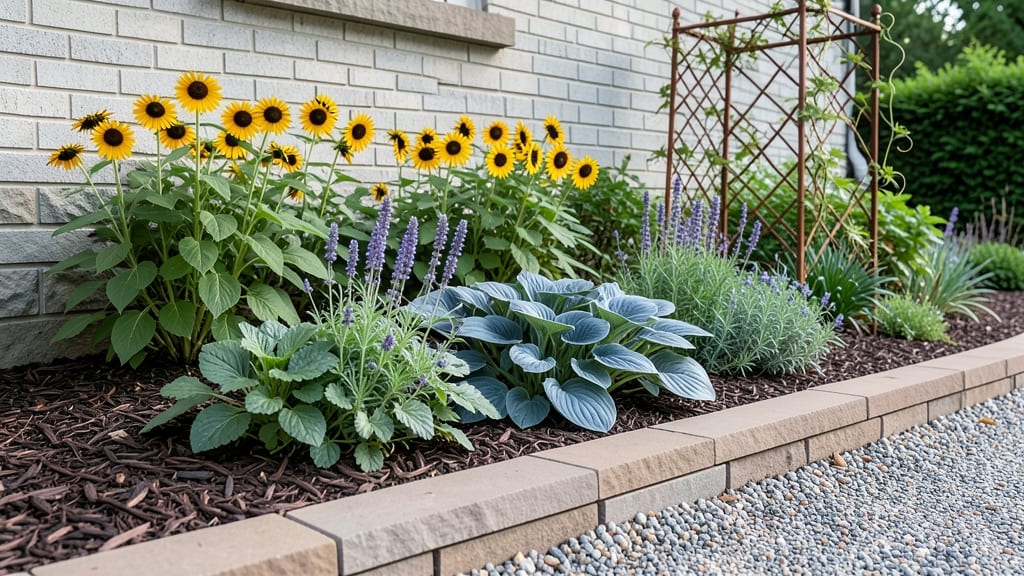
A flower bed against your house foundation can transform a bare patch into a lush, private retreat—if you plan it right. 🌿 I’ve seen too many well-intentioned beds turn into soggy, weed-choked eyesores because of poor drainage or aggressive roots.
The key is choosing shallow-rooted perennials that keep water away from your foundation while adding year-round color and texture.
Start with soil prep: slope the bed slightly away from the house to prevent water pooling, and mix in 2-3 inches of compost to improve drainage. Then layer with 3-4 inches of mulch—wood chips or straw—to suppress weeds and retain moisture.
For plants, opt for daylilies, hostas, or ornamental grasses, which thrive in foundation conditions without crowding your home’s roots.
By summer, you’ll have a vibrant border that softens your home’s lines while adding privacy. The right plants will bloom in waves—spring bulbs, summer perennials, and fall foliage—so you’re never stuck with a bare spot. Plus, the mulch layer keeps weeds down and soil temperatures stable, making maintenance a breeze.
This design works for any home style, from modern siding to brick exteriors. The trick is balancing height variation (tall back, shorter front) and color coordination with your house’s palette. Start small if needed—even a 3-foot-wide strip makes a difference—and expand as you gain confidence.
📚 In This Guide
- What you need
- Instructions
- Tips and common mistakes
- Wrapping up and next steps
What you need
- ● Soil: 1–2 cubic yards of high-quality topsoil (amended with compost for drainage).
- ● Mulch: 5–10 bags (2–3 cubic feet each) of organic mulch (cedar or pine for durability).
- ● Plants: Perennials (e.g., hostas, heucheras, or ferns): 12–24 plants (spaced 12–18" apart).
- ● Shrubs (e.g., boxwood, hydrangeas, or dwarf lilacs): 6–12 plants (spaced 2–4 ft apart).
- ● Evergreens (e.g., junipers or holly): 4–6 plants for year-round privacy.
- ● Edging: 20–30 ft of landscape fabric or plastic edging (to define the bed).
- ● Drainage: 50–100 ft of perforated drain pipe (if foundation drainage is a concern).
- ● Shovel & spade (for digging).
- ● Wheelbarrow (for hauling soil/mulch).
- ● Garden rake (to level the bed).
- ● Measuring tape & string line (for layout).
- ● Gloves & knee pads (because comfort matters!).
- ○ Optional: Soil tester (to check pH/drainage), pruners (for trimming), and a landscape stapler (to secure fabric).
- ● Clear the area of weeds/debris (use a weed killer if needed).
- ● Check for utility lines (call 811 in the U.S. before digging!).
- ● Ensure the foundation is dry and stable (no active leaks or erosion).
- ● Pro tip: Sketch a rough design first—measure your foundation’s length and height to plan plant spacing! 🎯
Step-by-step guide to designing a flower bed against your house foundation
Here's how to create a beautiful, functional border that protects your foundation while adding privacy and curb appeal.
🪴 Step 1: Assess Foundation and Drainage Requirements
Start by examining your foundation's condition and drainage needs. Look for any cracks or signs of water pooling near the base—these indicate poor drainage that could worsen with plantings. Measure the width of the space you want to fill, typically 12-24 inches from the house, to determine plant spacing and material quantities.
Use a 4-foot level to check for slope—your bed should slope away from the house at a 5% grade (½ inch per foot) to prevent water from seeping into the foundation. If your yard slopes toward the house, you'll need to excavate deeper on the house side to create this outward angle.
🌱 Step 2: Prepare the Soil and Install Edging
Remove any existing grass or weeds within your marked area, then dig down 8-12 inches deep to loosen compacted soil. Amend the native soil with 2-3 inches of compost and 1 inch of perlite to improve drainage and aeration. This prevents root-bound plants that can damage foundation walls over time.
Install flexible plastic or metal edging along the outer edge of your bed to contain mulch and plants. Secure it with landscape staples every 12 inches. For the house side, use landscape fabric to separate plants from the foundation—leave a 6-inch gap between fabric and house siding to allow airflow and prevent moisture buildup.
☀️ Step 3: Select and Plant Foundation-Friendly Species
Choose plants with shallow root systems that won't penetrate foundation cracks. For year-round interest, combine evergreen shrubs (like boxwood or juniper) with perennial flowers (such as lavender or ornamental grasses). Space shrubs 2-3 feet apart and perennials 12-18 inches apart to allow mature growth without crowding.
Dig holes twice as wide as the root ball but only as deep as the container. Place each plant so the top of the root ball sits ½ inch above ground level—this prevents soil from washing over roots during watering. Backfill with amended soil and water deeply to settle roots.
💧 Step 4: Mulch and Establish Maintenance Routine
Apply 3-4 inches of mulch (cypress or pine bark works best) over the entire bed, keeping it 2 inches away from plant stems to prevent rot. This retains moisture while suppressing weeds—critical for foundation plantings where irrigation can be tricky. Replenish mulch annually in early spring to maintain coverage.
Water newly planted beds 2-3 times weekly for the first month, then taper to once weekly once established. Check soil moisture by inserting your finger 1 inch deep—water when dry. Avoid overhead sprinklers near the foundation to prevent moisture buildup against siding.
✂️ Step 5: Monitor and Adjust for Seasonal Changes
Inspect your bed monthly for signs of water pooling or plant stress. In fall, add a 1-inch layer of compost to replenish nutrients. Prune evergreens in late winter to maintain shape, and cut back perennials in early spring before new growth appears. This keeps plants healthy and prevents overgrowth that could stress the foundation.
Watch for invasive roots from nearby trees—if you notice new saplings or aggressive spreaders, remove them immediately. A well-maintained foundation bed should require minimal adjustments after the first year, providing both privacy and protection for decades.
Tips & tricks for perfect foundation flower beds
Transforming your foundation into a functional garden border takes planning—and these pro tips will help you avoid common pitfalls while maximizing beauty and protection.
Drainage is Everything: The 5% slope (½ inch per foot) away from the house is non-negotiable for foundation protection. If your yard naturally slopes toward the house, dig deeper on that side to create the proper angle. I've seen too many foundation beds fail because homeowners skipped this critical step—water pooling against the house can lead to costly repairs over time.
Soil Prep Makes All the Difference: That 8-12 inch deep excavation isn't just about loosening soil—it's creating a root-friendly environment. When amending with 2-3 inches of compost and 1 inch of perlite, mix it thoroughly with the native soil. I recommend using a broadfork to aerate compacted areas before adding amendments, especially in clay-heavy soils common near foundations.
Plant Selection Strategy: Evergreen shrubs like boxwood or juniper provide year-round privacy, but their placement matters. Position taller varieties (3-4 feet) at the back of your bed and shorter ones (1-2 feet) toward the front. This creates visual depth while maintaining that crucial 6-inch gap between plants and the house. Pro tip: Choose dwarf varieties for tight spaces—they mature smaller but still deliver big privacy benefits.
Mulch Like a Pro: The 3-4 inches of mulch you'll apply isn't just for looks—it's a moisture barrier and weed suppressant. For foundation beds, I recommend cypress mulch because it breaks down slowly and won't compact like pine bark. Just remember to keep it 2 inches away from plant stems to prevent rot, and replenish annually in spring before new growth begins.
Pro Tips for Flower Bed Against House Foundation
- Transforming your foundation into a functional garden border takes planning—and these pro tips will help you avoid common pitfalls while maximizing beauty and protection.
- Drainage is Everything: The 5% slope (½ inch per foot) away from the house is non-negotiable for foundation protection.
- Soil Prep Makes All the Difference: That 8-12 inch deep excavation isn't just about loosening soil—it's creating a root-friendly environment.
Frequently asked questions
Got questions about creating a stunning flower bed against your house foundation? You’re not alone! Here are some of the most common concerns—and their practical solutions—to help you plan with confidence.
How close can a flower bed be to a house foundation?
Aim for at least 12–18 inches between the flower bed and your foundation to prevent moisture buildup or root damage. Use landscape fabric and gravel beneath the soil to improve drainage. If your foundation is prone to cracks, increase the distance to 2–3 feet for added protection.
When is the best time to plant a flower bed near a foundation?
Plant in early spring (after the last frost) or early fall (6–8 weeks before your first frost) for optimal root establishment. Avoid summer heat or winter cold, which can stress plants. Perennials and shrubs thrive with this timing, while annuals can be added later for instant color.
What’s a budget-friendly way to create a low-maintenance foundation flower bed?
Start with native plants (they require less water and care) and mulch heavily to suppress weeds. Use drought-tolerant ground covers like creeping thyme or sedum between larger plants. Recycled materials (like bricks or stones) for borders can cut costs while adding charm.
How do I keep pests and weeds out of my foundation flower bed?
Apply a pre-emergent herbicide in early spring to block weeds, then mulch with 3–4 inches of organic mulch (like wood chips) to smother them. Choose pest-resistant plants (e.g., lavender, marigolds, or boxwood) and avoid overwatering, which attracts slugs and fungi.
Can I add a flower bed against a foundation with poor soil?
Yes! Test your soil first—if it’s clay-heavy or compacted, amend it with compost or sand before planting. For sandy soil, mix in organic matter like peat moss. Raised beds (even shallow ones) can also improve drainage and root health. Container gardening is another great option for tricky spots!
Wrapping up and next steps
A flower bed against your house foundation isn’t just a decorative touch—it’s a smart way to boost curb appeal, add privacy, and create a thriving outdoor space that works year-round. 🌿 With the right plants, thoughtful planning, and a few key tips, you can transform this often-overlooked area into a lush, functional retreat that enhances both beauty and functionality.
Ready to roll up your sleeves? Start by sketching your design, gathering supplies, and diving in—your future garden (and neighbors!) will thank you. Happy planting! 🌸