
Flowers
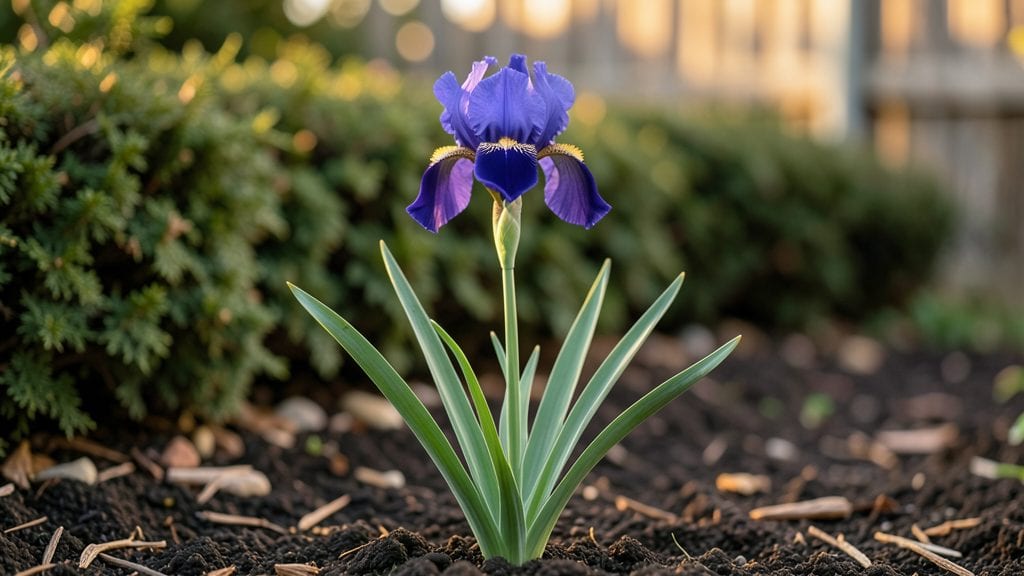
Deciding whether to treat Dutch iris as a perennial or annual depends on your climate: it thrives as a perennial in mild zones but is typically grown as an annual in colder regions, blooming for 2-3 weeks in spring before dying back or needing replanting.
This distinction comes down to frost sensitivity—Dutch iris bulbs can survive winter in zones 7-10 but often rot in colder areas. 🌱 The key is understanding your local freeze patterns: in warmer climates, bulbs may return year after year, while northern gardeners usually replant fresh bulbs annually.
Many growers treat it as a "seasonal perennial," enjoying its dramatic blooms while accepting the natural lifecycle limits.
What's interesting is how this affects planting strategies. In colder regions, gardeners often plant bulbs in early fall for spring blooms, knowing they'll need to replace them after one season.
Meanwhile, in milder climates, established plants may reward you with multiple bloom cycles over several years if given proper care—though even there, bulbs eventually weaken and need dividing.
💡 In This Article
- Climate Factors Affecting Dutch Iris Lifespan
- Year-Round Dutch Iris Care for Extended Blooms
Climate factors affecting Dutch iris lifespan
The Dutch iris's perennial vs. annual behavior hinges on its root system hardiness and cold tolerance thresholds. In USDA zones 7-10, where winter temperatures rarely drop below 10°F, the iris's fleshy rhizomes (horizontal root stems) remain dormant but intact through winter.
These rhizomes store nutrients that fuel spring regrowth, allowing the plant to return year after year. The key mechanism is their ability to enter cold acclimation—a physiological process where cells increase protective sugars and proteins that prevent ice crystal formation in tissues.
In colder zones (USDA 6 and below), the problem isn't just surface frost—it's the soil freeze depth that becomes critical. Dutch iris rhizomes can survive brief exposures to 20°F, but prolonged sub-freezing soil temperatures (15°F or lower) cause cellular damage through osmotic shock.
When ice forms in the rhizome's vascular system, it disrupts water transport, leading to rot. Studies show that even a 3-inch soil freeze can kill 60-80% of rhizomes, explaining why northern gardeners see their plants "die back" after one season.
The rhizomes' lack of true winter hardiness (like tulip bulbs) makes them particularly vulnerable.
Seasonal dormancy patterns also differ dramatically by climate. In mild zones, Dutch iris enters a shallow dormancy—rhizomes remain slightly active, ready to sprout at the first warm snap. This explains why established plants in zone 9 may produce secondary blooms in fall.
In contrast, northern plants undergo deep dormancy forced by cold, where all above-ground growth dies completely. The rhizomes' energy reserves get depleted faster without photosynthesis, accelerating their decline. This is why replanting fresh bulbs annually becomes necessary in colder regions.
What most gardeners overlook is the microclimate effect—even within a zone, sheltered spots can extend perennial growth. For example, a Dutch iris planted against a south-facing wall in zone 6 might survive winters where exposed plants fail.
The rhizomes' proximity to 8-12 inches of mulch can add 5-10°F of protection. This explains why some northern growers achieve limited perennial success with strategic planting. The trade-off? Even in protected spots, blooms may be 2-3 weeks later than annual plantings due to slower rhizome recovery.
Here's the science behind why this matters: Dutch iris rhizomes contain high starch reserves (up to 30% dry weight), but these deplete at 0.5% per day during dormancy. In cold climates, the extended winter means reserves run out before spring growth can replenish them.
In warm zones, the shorter dormancy period preserves enough energy for multiple bloom cycles. This energy budget explains why established plants in zone 8 might flower for 3-4 years before needing division, while zone 5 plants rarely survive past one season.
The most surprising factor? Rainfall patterns during dormancy. Wet, cold winters increase rhizome rot risk by 40-50% compared to dry winters.
This is why gardeners in humid zone 7 areas often treat Dutch iris as annuals despite being in the "perennial zone"—the combination of cold and moisture creates ideal conditions for fungal pathogens that attack weakened rhizomes. The solution?
Raised beds with well-draining soil can push perennial success into zone 6 with proper care. 🌱