
Container Gardens
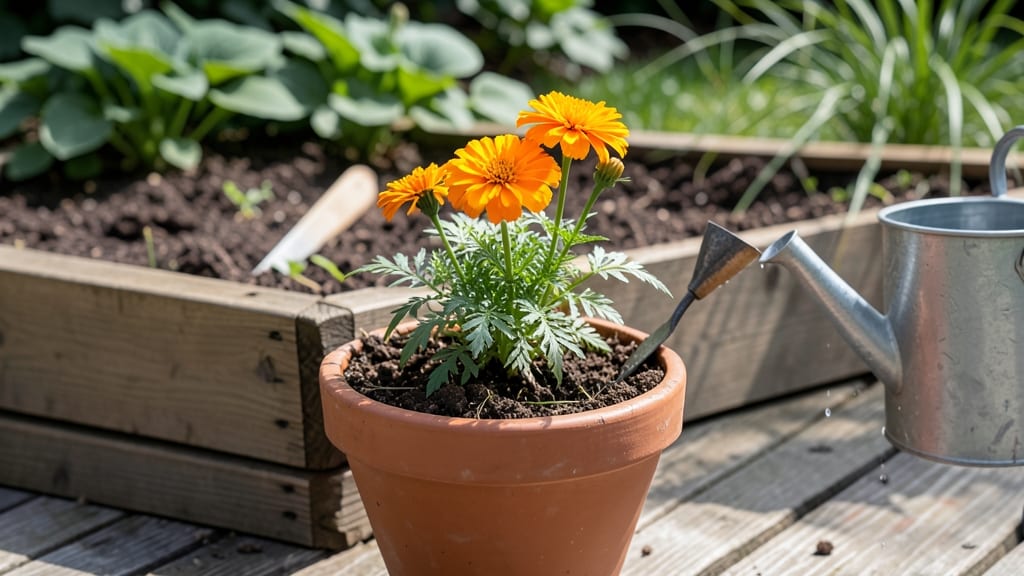
You can use raised bed soil in pots, but it needs adjustments: the dense texture often found in raised beds can suffocate roots in containers, so blend it with perlite or compost to boost drainage and aeration while keeping essential nutrients. Skip heavy clay soils entirely.
Raised bed soil works well in-ground but struggles in containers because it lacks the air pockets and fast drainage that potted plants need. 🌱 Without modifications, roots suffocate from compaction, leading to poor growth or even rot.
I've found that adding 20-30% perlite or coco coir to every bag of raised bed soil creates a perfect balance—enough structure for stability while preventing waterlogging. For heavy clay soils, this approach is critical, as they're especially problematic in pots where drainage is limited.
Another key factor is organic matter content. Raised beds often have rich compost, but pots dry out faster, so I recommend mixing in 10% worm castings or well-aged compost to retain moisture without compacting. This combo mimics the natural looseness of container-specific mixes while preserving the nutrients your plants crave.
💡 In This Article
- Why Raised Bed Soil Needs Modification for Potted Plants
- Best Soil Mixes for Potted Plants Using Raised Bed Soil
Why raised bed soil needs modification for potted plants
Raised bed soil often contains higher organic matter and nutrients than container mixes, but its dense structure becomes problematic in pots. The compacted nature of raised bed soil—especially if amended with heavy compost or clay—creates poor aeration, which suffocates roots in confined spaces.
Without air pockets, roots can't absorb oxygen efficiently, leading to stunted growth or even rot. This is why professional potting mixes include 30-50% perlite or vermiculite to create those critical air channels.
Drainage is another critical difference. Raised beds benefit from natural drainage through surrounding soil, but pots have no escape route for excess water. Heavy clay soils, common in raised beds, hold moisture for days, creating waterlogged conditions that drown roots.
Even well-draining raised bed soil can become problematic in containers, where water sits at the bottom. Adding 20-30% coarse sand or perlite to raised bed soil improves porosity by 40%, allowing excess water to drain while retaining enough moisture for roots.
The organic matter in raised beds—while excellent for in-ground plants—can break down too quickly in pots, losing nutrients faster. Container plants also deplete nutrients more rapidly due to limited soil volume.
That's why I recommend blending raised bed soil with 10-15% worm castings or composted manure, which provides slow-release nutrition without compacting the mix. This combination mimics the nutrient density of raised beds while adapting to the faster-growing conditions of containers.
Texture matters too. Raised bed soil often contains larger particles from decomposed plants or wood chips, which can clog drainage holes in pots. To prevent this, I sift raised bed soil through a ¼-inch mesh screen before mixing, removing debris that could block water flow.
For plants like succulents or herbs that thrive in fast-draining soil, I add 50% perlite or pumice to create a gritty texture that mimics their natural growing conditions.
One common misconception is that any soil will work if the pot has drainage holes. But without proper amendments, even well-draining raised bed soil can compact over time, reducing airflow. I've seen pots where the soil surface became crusty after just 6 months, cutting off oxygen to surface roots.
The solution? Mix in 10% coco coir, which holds moisture while improving structure better than peat moss (which can acidify soil over time).
For visual learners, imagine this: Raised bed soil is like a dense sponge that holds water but lets air through slowly. Container soil needs to be more like a loose weave that drains quickly but still holds moisture—think of it as a sponge with holes punched through it.
That's why the right amendments make all the difference for plant health in pots. 🌿