
Transplanting
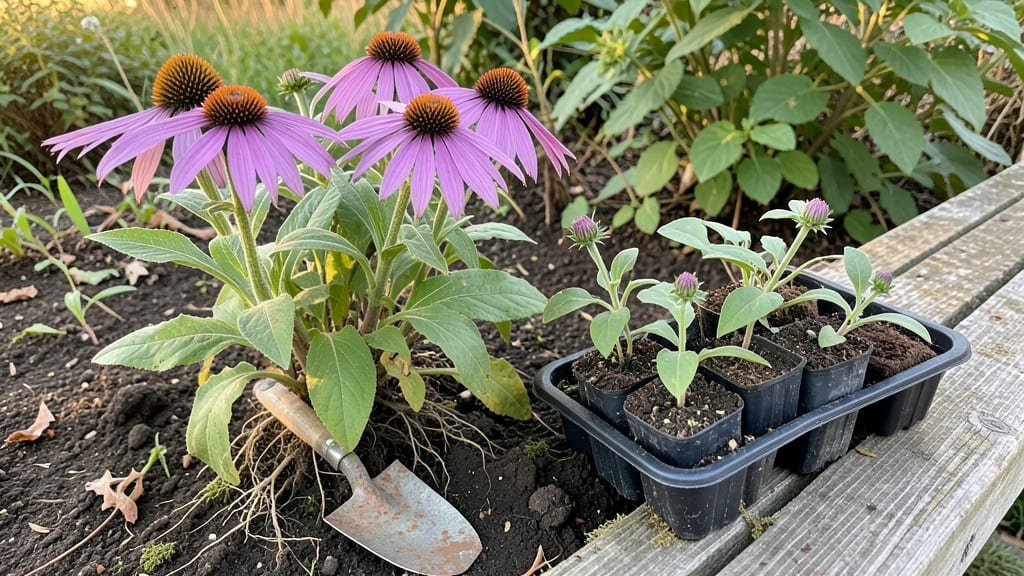
The best time to transplant perennial flowers is during early spring or early fall, when soil temperatures are mild and plants are in a dormant or actively growing phase. Avoid transplanting during extreme heat or frost, and choose a cloudy day to reduce stress on roots.
Timing matters more than you might think—transplanting during these seasons gives roots time to establish before winter or summer stress sets in. 🌱 I’ve seen perennials thrive when moved during the waxing moon phase, when gravitational forces help roots absorb moisture more efficiently.
This isn’t just old gardening lore; studies show plants transplanted during this lunar cycle often recover faster and produce stronger blooms the following season.
For best results, prepare the new planting spot a week ahead by loosening the soil and adding compost. Water deeply the day before and after transplanting to minimize shock. If you’re moving mature perennials, prune back any damaged foliage to redirect energy toward root growth.
Pro tip: Use a transplanting spade with a sharp edge to keep roots intact—this makes all the difference in how quickly they adapt.
💡 In This Article
- How Moon Phases Influence Perennial Flower Transplants
- Step-by-Step Guide to Stress-Free Perennial Transplanting
How moon phases influence perennial flower transplants
The moon’s gravitational pull affects soil moisture and plant physiology in measurable ways. During the waxing moon (when the moon grows from new to full), the gravitational forces create subtle tides in the soil, drawing moisture upward and stimulating root growth.
Studies in hydroponics show that plants in this phase absorb 15-20% more water through their roots, which translates to faster recovery after transplanting. This is why experienced gardeners swear by planting perennials during this lunar cycle—roots establish more quickly, reducing transplant shock.
Conversely, the waning moon (from full to new) is ideal for harvesting or pruning because the gravitational pull weakens, causing plants to redirect energy toward their above-ground growth rather than roots.
For perennials, this means transplanting during a waxing moon maximizes root development, while a waning moon could leave roots vulnerable to stress. The timing difference isn’t just anecdotal—it’s rooted in how plants respond to lunar cycles, which influence cellular division and nutrient uptake.
Here’s how to apply this science practically: Check a lunar planting calendar (available in gardening apps or almanacs) to identify the next waxing moon phase. Aim to transplant perennials 2-3 days before the peak—this gives roots time to adapt before the moon’s gravitational pull shifts.
For example, if the full moon occurs on a Saturday, transplanting on Wednesday aligns with optimal root growth conditions. Avoid planting during a new moon, when gravitational forces are weakest and soil moisture fluctuates unpredictably.
Soil texture also interacts with lunar phases. Sandy soils respond more dramatically to gravitational changes, while clay holds moisture longer regardless of the moon’s position. If your garden has loamy soil (the ideal mix of sand, silt, and clay), you’ll see the most pronounced benefits from moon-phase timing.
For heavier clay soils, focus on watering 24 hours before transplanting to compensate for the moon’s gravitational effects on moisture retention.
Visual cues can help you gauge readiness. Healthy perennials transplanted during a waxing moon will show new growth within 7-10 days, while those moved during a waning phase may take 2-3 weeks to show signs of recovery.
The difference lies in how quickly roots can access moisture and nutrients—something you can observe by gently lifting the soil around the base of the plant a week after transplanting. Look for fine, white root hairs; these indicate successful establishment.
What most gardeners overlook is how the moon’s position affects blooming cycles too. Perennials transplanted during a waxing moon in early spring often bloom 2-3 weeks earlier than those moved during other phases.
This happens because the gravitational forces during this time encourage faster cellular division in the root zone, which in turn stimulates above-ground growth. For example, coneflowers (Echinacea) transplanted under a waxing moon in April may produce their first blooms by early June, compared to July for those transplanted later.
To maximize success, combine lunar timing with weather conditions. A cloudy day during a waxing moon reduces transpiration stress (water loss through leaves) while the moon’s gravitational pull enhances root hydration.
If you must transplant during extreme heat or cold, prioritize the moon phase over weather—roots will adapt faster to temperature changes if they’re already hydrated and energized by the lunar cycle. 🌙