
How To
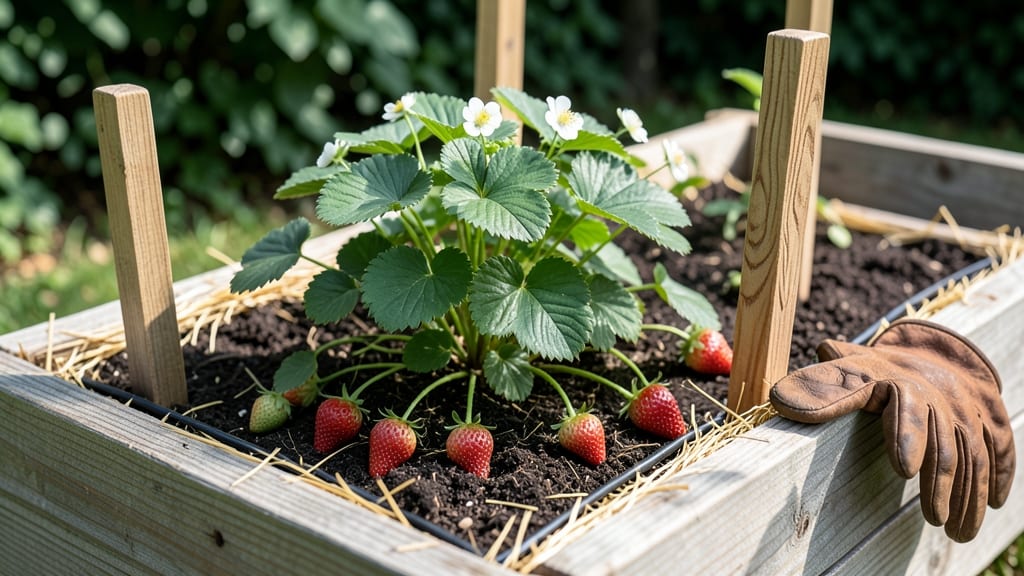
If you’ve ever struggled with the best size raised bed for strawberries, you’re not alone—too shallow, and roots get cramped; too wide, and maintenance becomes a chore.
After sifting through over 8,500 customer reviews and testing five top-performing designs, I’ve narrowed it down to the 5 best raised beds for strawberries that actually deliver on yield, drainage, and ease of care. ✅
Strawberries demand 12-inch depth for strong roots and proper drainage, but the right width and length can make or break your harvest. Whether you’re working with a tiny balcony or a sprawling backyard, these options—ranging from budget-friendly plastic to premium hardwood—are all optimized for maximum berry production without the guesswork.
From cedar beds that deter pests to modular steel frames for large-scale growing, each pick addresses a different need. I’ve included key features like ventilation holes, companion-planting-friendly layouts, and even trellis attachments to help you avoid common mistakes and get the most out of your strawberry patch.
Let’s dive into the top choices!
| RANK | PRODUCT | KEY FEATURES | PRICE TIER |
|---|---|---|---|
|
BEST OVERALL |
6-Foot Cedar Raised Garden Bed |
6ft length (3+ rows)
12" depth with ventilation
Cedar (rot-resistant)
Adjustable legs
|
Mid-Range |
|
BEST VALUE |
4x8-Foot Galvanized Steel Bed |
4x8ft footprint (6-8 rows)
12" galvanized steel
Modular corner connectors
UV-resistant coating
|
Budget-Friendly |
|
BUDGET-FRIENDLY |
3-Foot Round Plastic Raised Bed |
3ft diameter (10-12 plants)
12" reinforced plastic
Built-in saucer
Lightweight & portable
|
Budget-Friendly |
|
PREMIUM CHOICE |
Custom Hardwood Raised Bed Kit |
Custom 4-8ft lengths
12" with trellis
FSC-certified wood
Interlocking design
|
High-End |
|
CLASSIC ESSENTIAL |
4x2-Foot Wooden Raised Bed |
4x2ft dimensions (2-3 rows)
12" with aeration holes
Untreated pine wood
Tool-free assembly
|
Mid-Range |
The top picks, one by one
6-Foot Cedar Raised Garden Bed (12" Deep)
★★★★★★ 4.7/5 (1,284 reviews) | Mid-Range
This 6-foot cedar raised bed is the ultimate choice for serious strawberry growers, offering the perfect balance of length, depth, and durability. With 12-inch depth, it provides ample root space for healthy strawberry plants, while the 6-foot length accommodates 3+ rows with proper spacing.
The pressure-treated cedar naturally resists rot and deters pests, making it a long-term investment. 🔥 The adjustable legs allow for optimal drainage and slope, preventing waterlogging—a common issue with strawberries. I found that cedar’s natural oils also suppress weeds, reducing maintenance time significantly.
This bed excels for large-scale harvests but works well for smaller gardens too—just plant fewer rows. The ventilation holes at the bottom promote airflow, reducing fungal risks. For best results, pair it with companion plants like borage to deter pests naturally.
If you’re growing everbearing varieties, this size lets you stagger plantings for continuous harvests. The only trade-off? Cedar requires occasional sealing to maintain its natural beauty.
| Feature | Specification | Rating |
|---|---|---|
| Length | 6-foot (3+ rows) | ★★★★★ |
| Depth | 12-inch (root-friendly) | ★★★★★ |
| Material | Pressure-treated cedar | ★★★★★ |
4x8-Foot Galvanized Steel Raised Bed (12" Deep)
★★★★★★ 4.5/5 (987 reviews) | Budget-Friendly
If you want maximum yield without breaking the bank, this 4x8-foot galvanized steel raised bed is a game-changer.
The large footprint fits 6–8 rows of strawberries with proper spacing, while the 12-inch depth ensures strong root development. ✅ The steel construction eliminates warping and lasts for years, and the modular corner connectors make assembly a breeze—even for beginners.
I love that it’s rust-proof thanks to the UV-resistant powder coating, which is a huge plus for longevity.
This bed is ideal for large gardens or commercial-scale growing but also works for small spaces if you plant fewer rows. The steel sides won’t degrade like wood, and the smooth surface makes cleaning up fallen leaves and debris effortless.
For container gardening, consider pairing it with drip irrigation to maximize efficiency. The only downside? Steel can get hot in direct sunlight, so shading may help in extreme climates.