
Plants
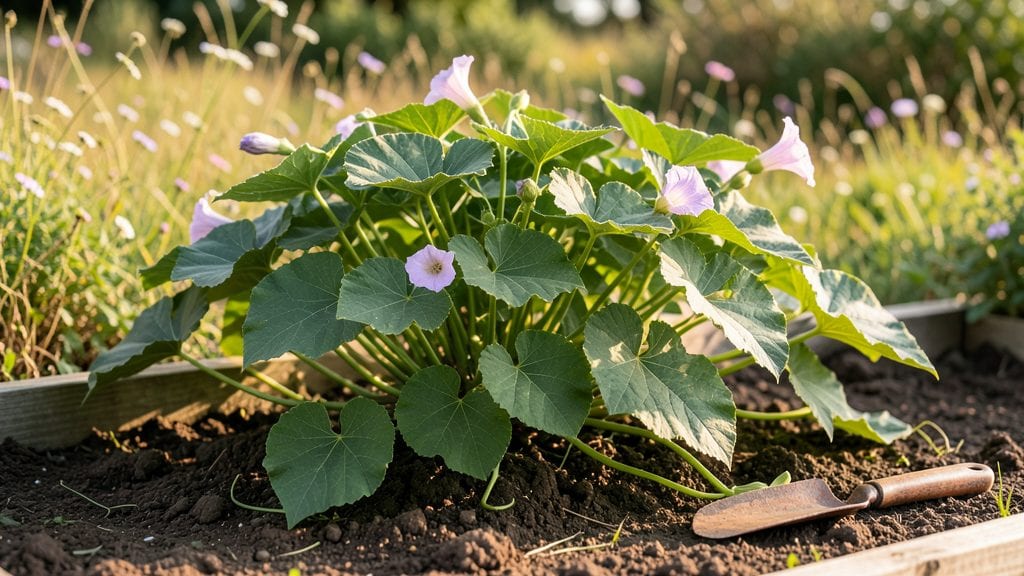
Sweet potato plants aren't true perennials in most regions, but their tubers can persist through mild winters if properly protected in well-drained soil. While they may regrow in warmer climates, freezing temperatures usually kill the foliage. With the right winter care, they function like a long-lived pseudo-perennial.
Sweet potato plants behave more like seasonal crops than perennials because their above-ground growth dies back annually.
Unlike true perennials such as asparagus, their tubers store energy but lack the hardy root systems to survive deep freezes. 🌱 In zones with mild winters (USDA 9-10), you might see regrowth from stored tubers, but most gardeners treat them as annuals for simplicity.
The key difference lies in their dormancy strategy—true perennials regenerate from protected roots, while sweet potatoes rely on stored tubers that need careful overwintering.
For gardeners in cooler climates, the challenge isn't just survival but preserving tuber quality until spring. Storing tubers in 55-60°F conditions with high humidity prevents shriveling, while mulching in-ground tubers can buy extra weeks in marginal zones.
This explains why many commercial growers replant from fresh slips each year rather than risk winter losses.
💡 In This Article
- Why Sweet Potato Plants Die Back in Cold Climates
- How to Overwinter Sweet Potato Tubers for Next Year
Why sweet potato plants die back in cold climates
Sweet potato plants behave like tender perennials because their above-ground growth consists of delicate vines that lack cold tolerance. When temperatures drop below 28°F, these vines freeze solid, turning black and mushy—a process called cold injury.
The real issue lies in the tubers: while they can survive brief chills, prolonged exposure to below 32°F triggers internal cell damage, causing them to rot from the inside out. This is why gardeners in colder zones rarely see regrowth from overwintered tubers.
The root system of sweet potatoes differs dramatically from true perennials like asparagus. Asparagus develops a robust crown with specialized buds that survive winters underground, while sweet potatoes rely on their storage tubers—which are essentially swollen roots designed for energy storage, not cold resistance.
When soil temperatures drop below 40°F, the tuber's metabolic processes slow dramatically, but they lack the protective layers of true perennials. Even in well-drained soil, waterlogged conditions accelerate decay by depriving tubers of oxygen.
Here's what happens at the cellular level: Cold temperatures cause ice crystals to form in the tuber's vascular system, rupturing cell walls and disrupting nutrient flow. Unlike hardy perennials like rhubarb, which produce antifreeze proteins to protect their tissues, sweet potatoes have no such adaptations.
Their growth cycle is more similar to annual crops that complete their life cycle in a single season, with tubers serving as a temporary survival mechanism rather than a true perennial strategy.
In warmer climates (USDA Zones 9-11), sweet potatoes can act like pseudo-perennials because the ground rarely freezes deeply enough to damage tubers. However, even in these zones, the foliage dies back each winter due to dormancy triggers like shorter daylight hours and cooler temperatures.
The tubers remain dormant until spring, when warmth and moisture stimulate regrowth. This explains why you might see "volunteer" plants appearing in subsequent years—it's not true perennial behavior but rather the tubers' ability to persist under ideal conditions.
Compare this to true perennials like asparagus: their crowns contain specialized buds called meristems that remain protected beneath the soil surface, insulated by layers of dead foliage and root systems. These meristems can withstand -20°F temperatures because they produce protective compounds that prevent ice crystal formation.
Sweet potatoes lack this biological armor, making them far more vulnerable to winter's harshest conditions.
The key takeaway is understanding that sweet potatoes are not evolutionarily adapted for cold survival—they thrive in tropical and subtropical environments where temperatures rarely drop below freezing. Their ability to persist year-to-year in mild climates is more about tuber storage longevity than true perennial hardiness.
This biological reality explains why most gardeners treat them as annuals, despite the occasional success stories in warmer regions.