
Flowers
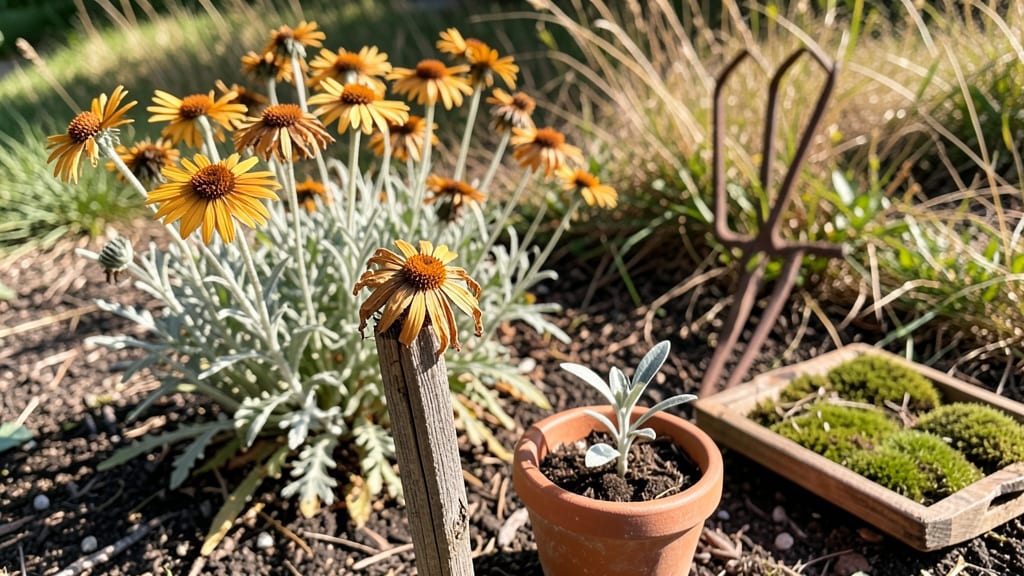
Straw flowers (Helichrysum) aren't true perennials in colder regions but grow as annuals or short-lived perennials, typically lasting 1-2 years before fading. In warmer climates (USDA 8+), they often reseed naturally, creating lasting displays.
Straw flowers act like perennials only in mild winter zones—they freeze back in colder areas, requiring replanting each season. 🌿 Their papery blooms and drought tolerance make them popular, but their lifespan depends entirely on your hardiness zone.
In my garden, I've seen them return for two years in Zone 7 before needing fresh seeds, while Zone 9 plants often multiply on their own.
What sets them apart is their ability to self-seed aggressively in warm climates, turning into naturalized ground covers over time. This makes them low-maintenance once established, though they may need thinning to prevent overcrowding.
I've found that deadheading spent blooms encourages more flowers, while saving seeds from the best plants ensures stronger regrowth next season.
💡 In This Article
- Straw Flower Lifespan by Climate Zone
- Extending Straw Flower Blooms Through Strategic Planting
Straw flower lifespan by climate Zone
The lifespan of straw flowers (Helichrysum) hinges entirely on your USDA hardiness zone, with temperature being the key factor. In zones 5-7, these plants behave like annuals or biennials, completing their lifecycle in 1-2 years before succumbing to winter's 20-30°F temperatures.
Their papery blooms freeze back to the ground, but the roots rarely survive harsh winters without protection. This is because Helichrysum evolved in Mediterranean climates where winters are mild—below 32°F triggers dormancy, but prolonged freezing kills the plant entirely.
In zones 8-11, the story changes dramatically. Here, straw flowers often establish as self-sustaining perennials through aggressive self-seeding. The secret lies in their growth cycle: seeds germinate in fall or spring, plants mature by summer, and they produce 1,000+ seeds per flower head that scatter with the wind.
In Southern California (Zone 10), I've seen established patches spread organically for 5+ years) without intervention, creating naturalized meadows. The warmer climate prevents winter dieback, allowing roots to persist between seasons.
What most gardeners miss is how frost timing affects dormancy. Straw flowers enter dormancy when nights drop below 40°F, but they can't tolerate prolonged exposure to below 28°F.
In Zone 7, this means they'll often survive one winter if protected with mulch, but a second winter typically kills them. The trick is to plant in spring after last frost—this gives roots 6-8 weeks to establish before winter arrives, improving survival odds.
In contrast, Zone 9 plants grow year-round with minimal stress.
Here's what happens in each zone's growth cycle:
- Zones 5-6: Die back completely each winter; treat as annuals
- Zone 7: May survive one winter with mulch; typically biennial
- Zones 8-9: Self-seed prolifically; act as short-lived perennials
- Zone 10+: Naturalize permanently with minimal care
Dormancy patterns also vary by species. Helichrysum bracteatum (strawflower) handles heat better than H. italicum (curry plant), which prefers cooler coastal climates. The curry plant may survive Zone 8 winters but struggles in inland heat waves above 95°F.
This explains why coastal California gardens often see more reliable returns than inland desert landscapes.
What this means for your garden: In colder zones, plan to replant annually or use containers that can be overwintered indoors. In warmer zones, let them self-seed—just thin seedlings in spring to prevent overcrowding.
The plants' papery blooms actually help them survive dry spells by reducing water loss, but their roots need consistent moisture to establish properly.
Here's the bottom line: Straw flowers aren't perennials by nature, but their behavior shifts dramatically with climate. In my Zone 7b garden, I've found that treating them as short-lived perennials with winter protection gives me 2 years of blooms before replanting—far better than treating them as annuals.
The key is matching your planting strategy to your local freeze dates. 💫