
Flowers
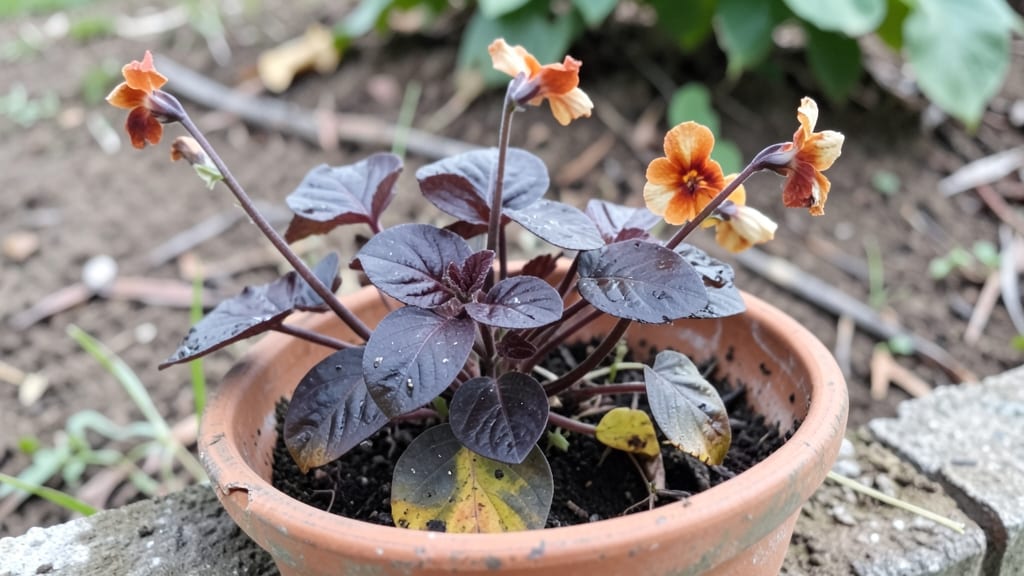
New Guinea impatiens are not perennials in most climates—they thrive as tender annuals, dying back in frost. Only in USDA zones 11-12 (year-round warmth) can they persist as perennials, requiring winter protection elsewhere.
New Guinea impatiens originate from tropical regions where frost never touches the ground, making them far more delicate than their cousin, the Impatiens walleriana (garden impatiens). 🌱 Their foliage blackens at 50°F or below, which is why gardeners in cooler zones treat them as annuals—planting fresh each spring and letting them fade with autumn's chill.
The good news? Their vibrant blooms return so reliably that many gardeners don't miss the perennial status, especially since cuttings root easily for next season's starts.
For those in USDA zones 10 and below, the secret to keeping these tropical beauties alive year-round lies in strategic overwintering. Moving potted plants indoors near bright windows (or under grow lights) and maintaining 60-70% humidity mimics their native environment.
I've even seen gardeners wrap containers in bubble wrap for extra insulation during unexpected cold snaps—because when you've fallen for their rainbow-colored blooms, a little extra effort feels worth it.
💡 In This Article
- New Guinea Impatiens Cold-Hardiness Limits
- Year-Round Growing Hacks for New Guinea Impatiens
New Guinea impatiens cold-hardiness limits
New Guinea impatiens (Impatiens x hawkeri) evolved in the lush, frost-free rainforests of Papua New Guinea, where temperatures hover between 70-85°F year-round. Their cells lack the protective mechanisms found in cold-hardy plants—like antifreeze proteins or waxy cuticles—that allow species like Impatiens walleriana to survive brief chills.
When nighttime temperatures dip below 50°F, their leaves begin to yellow and crisp, a process triggered by ice crystal formation in cell walls that disrupts nutrient flow.
The key threshold is 40°F, where irreversible damage occurs within 12-24 hours. This sensitivity stems from their tropical adaptation: their stems contain minimal lignin (the woody polymer that provides structural support), making them prone to collapse under stress.
Compare this to Impatiens balsamina (touch-me-nots), which can tolerate 32°F for short periods—their thicker stems and deeper root systems store energy for recovery. 🌡️
In practice, this means New Guinea impatiens behave like tender perennials—they'll regrow from roots if protected, but their above-ground growth dies completely. Even a single frost event can kill plants to the ground, unlike Impatiens walleriana, which often survives light frosts by going dormant.
The confusion arises because gardeners in zones 10-11 sometimes see regrowth after mild winters, but this is from protected roots, not true perennial persistence.
What most gardeners don't realize is how quickly damage occurs: 3 hours at 45°F can cause visible leaf burn, while 24 hours at 40°F will kill the plant entirely. This rapid response contrasts with hardy annuals like zinnias, which can handle 28°F for short periods.
The solution? Treat them as annuals in zones 9 and below, or invest in winter protection like row covers or heated containers.
Here's the botanical kicker: their native soil stays consistently warm due to dense canopy cover and high humidity. Replicating this means keeping them in well-draining, moisture-retentive mixes (like 60% peat/40% perlite) and avoiding cold, dry winds. In containers, this becomes easier—you can simply move pots indoors before temperatures drop.
For those in USDA zone 11, where winter lows rarely drop below 45°F, New Guinea impatiens can persist as perennials—but only with year-round care. They'll need regular fertilizing (monthly 10-10-10 solution) and protection from afternoon sun during summer's peak heat.
The trade-off? Their vibrant blooms make the effort worthwhile, especially when you consider how quickly they rebound from cuttings—often flowering again within 8-10 weeks of propagation.