
Flowers
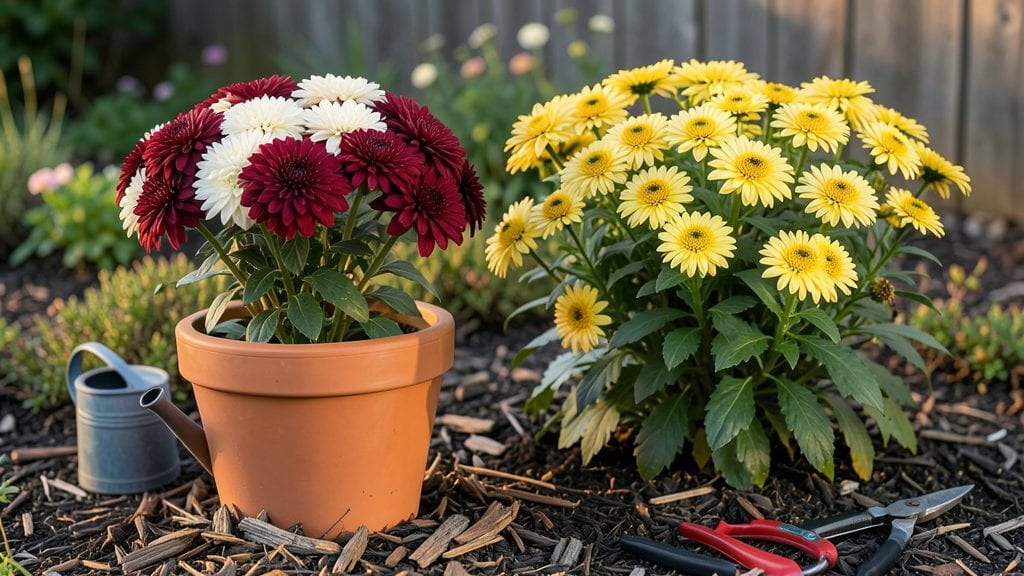
Mums are perennial flowers in warmer climates but often grown as annuals in colder regions due to frost sensitivity. Hardy varieties like 'Autumn Joy' or 'Snowball' survive winter in USDA Zones 5-9 with proper care, while tender types die back annually in freezing temperatures.
Whether mums thrive year-round depends entirely on your climate zone. 🌱 In regions with mild winters—like Zones 6-9—they naturally return each spring, blooming again from the same roots.
However, gardeners in colder areas (Zones 3-5) typically treat them as annuals because frost kills the tops, though the roots often survive underground.
The key difference lies in cultivar selection: hardy garden mums (like 'Autumn Joy') have tougher constitutions than the showy florist varieties, which are bred for color but not cold resilience.
Here's the science behind it: mums enter dormancy when temperatures drop, but their roots stay alive if protected by mulch or snow. In freezing zones, gardeners can still coax them back by cutting stems to 2 inches above ground and insulating with 6-12 inches of mulch.
This trick works because the energy stored in the roots fuels new growth once spring arrives.
💡 In This Article
- Mums Perennial Growth Zones Explained
- Extending Mum Season: Overwintering Tips for Cold Climates
Mums perennial growth Zones explained
Here's what's actually happening in your garden: mums are perennial plants that thrive in USDA Zones 5-9 because their root systems can withstand winter temperatures down to -15°F to 20°F.
The key factor is their natural dormancy cycle—when temperatures drop below 50°F, these plants redirect energy from foliage to their roots, forming protective buds that survive frost. This process is similar to how daylilies or peonies prepare for winter, but mums have a narrower temperature tolerance window.
The difference between garden mums (like 'Autumn Joy') and florist mums becomes clear when you look at their breeding. Garden varieties are developed to handle 30-50°F nighttime lows, while florist types (bred for vibrant blooms) often struggle below 25°F.
The science behind this involves their leaf structure—hardy mums have thicker, waxier leaves that reduce moisture loss during cold snaps. In Zone 5, for example, a well-mulched 'Snowball' mum can survive winters with 12-18 inches of snow cover acting as natural insulation.
What most people don't realize is how microclimates affect mum survival. Even in Zone 5, mums planted against south-facing walls or in protected microclimates can thrive year-round. The critical threshold is 28°F—below this, most mum varieties experience cellular damage.
This is why gardeners in marginal zones (like northern Zone 5) often lose their mums during harsh winters, while those in Zone 6 consistently see regrowth.
The root crown (where stems meet roots) is particularly vulnerable—this is why proper mulching (with 4-6 inches of straw or leaves) is essential for protection.
Consider these key factors when choosing mum varieties for your zone:
- Zone 5: Opt for 'Autumn Joy' or 'Pavement' series—these handle -15°F with mulch
- Zone 6-7: Most garden mums thrive naturally, including 'Diablo' (red) and 'Snowball' (white)
- Zone 8-9: Even tender florist mums may survive if protected from late frosts
The dormancy process involves complex biochemical changes. As temperatures drop, mums produce antifreeze proteins (similar to those in woody perennials) that prevent ice crystals from forming in their cells.
This is why you'll often see mums with brown stems but green roots in early spring—the roots have been storing carbohydrates all winter. The threshold for root survival is typically 15°F, though some hardy varieties can tolerate 10°F with proper protection.
One surprising detail is how late-season blooms affect winter survival. Mums that flower into November often have less energy stored for winter, making them more vulnerable. This is why gardeners in Zone 5 should deadhead spent blooms by mid-October to redirect energy to root development.
The trade-off? You'll sacrifice some fall color but gain a healthier plant for next year.
For gardeners pushing the limits in Zone 4, the 'Diablo' series stands out as an exception—its deep red blooms signal exceptional cold tolerance, often surviving -20°F with heavy mulch. This variety demonstrates how selective breeding can push natural cold hardiness beyond typical mum ranges. 🌟