
Plants
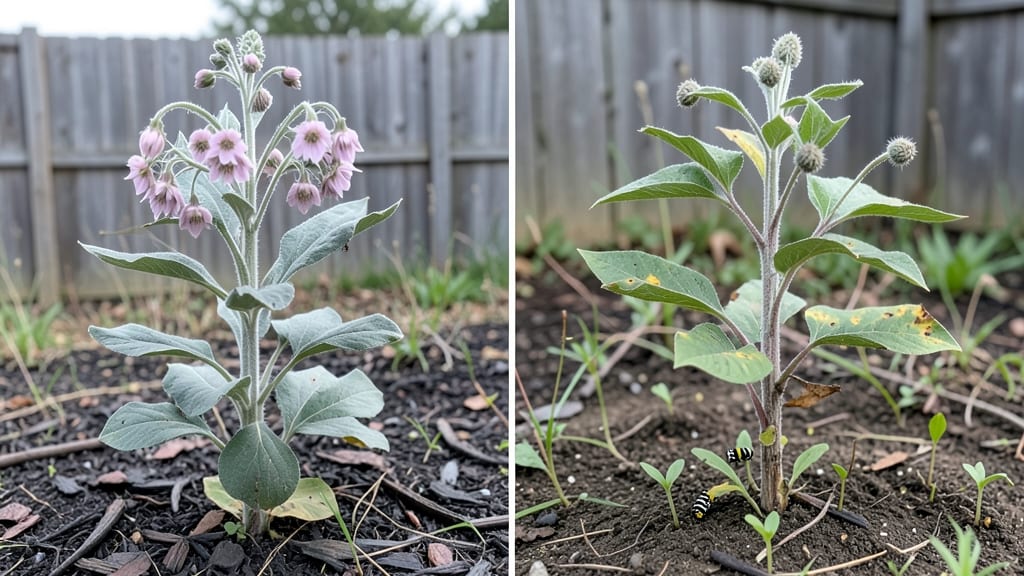
Milkweed plants are perennials in most climates, returning yearly with new growth from deep root systems, though some tropical varieties may behave as annuals in cold regions. Their hardiness depends on species and winter conditions.
Most milkweed species thrive as perennials because their extensive root systems store nutrients and moisture underground, allowing them to regrow each spring. 🌱 Native varieties like common milkweed (Asclepias syriaca) can survive harsh winters in zones 3-9, while tropical species such as Mexican milkweed (Asclepias curassavica) may die back in freezing temperatures.
The key difference lies in their dormancy strategies—hardy perennials enter a deep rest phase, whereas tropical types often rely on seed propagation when faced with cold.
This adaptability makes milkweed a fantastic choice for butterfly gardens, as they'll return year after year with minimal effort. Just be mindful of your local climate: in colder regions, mulching helps protect the roots, while warmer zones may require shade during peak summer heat.
The trade-off? Some tropical species offer year-round blooms, while native perennials provide seasonal nectar that monarchs prefer.
💡 In This Article
- Milkweed Root Systems and Overwintering Survival
- Best Milkweed Varieties for Long-Term Butterfly Gardens
Milkweed root systems and overwintering survival
Here's what actually happens underground that makes milkweed such resilient perennials: their root systems combine a deep taproot (extending 3-5 feet) with a dense network of fibrous lateral roots. This structure stores carbohydrates like starch and sugars, which fuel regrowth in spring.
For example, common milkweed (Asclepias syriaca) can store enough energy to sprout new shoots within 10-14 days after winter thaw, even when above-ground growth dies back completely. 🌱 The taproot's depth also helps anchor the plant against wind and access moisture from deeper soil layers during drought.
The science behind their cold hardiness lies in cellular adaptations. Hardy species like Asclepias syriaca produce antifreeze proteins that prevent ice crystal formation in their tissues down to -30°F. Their leaves and stems contain high concentrations of proline, an amino acid that acts as a natural cryoprotectant.
In contrast, tropical varieties like Asclepias curassavica lack these adaptations, which is why they often die back to the ground in freezing temperatures—though their roots may survive if protected by mulch.
The difference comes down to evolutionary pressure: temperate milkweeds evolved to endure seasonal freeze-thaw cycles, while tropical species prioritized rapid growth during warm seasons.
What most people don't realize is how dormancy works in these plants. During winter, milkweed enters a state called endodormancy, where growth is genetically suppressed until specific environmental cues (like consistent soil temperatures above 45°F) trigger budbreak.
This process is regulated by plant hormones like abscisic acid, which accumulates in response to short daylight hours. The root system remains metabolically active underground, maintaining cellular integrity even when surface growth is dormant. This dual-system approach—above-ground dormancy with below-ground activity—explains why milkweed can bounce back so vigorously each spring.
Consider these key factors when evaluating cold hardiness across species:
- Root depth: Deeper taproots (like in Asclepias incarnata) access moisture and nutrients from lower soil layers, improving survival during drought and cold
- Leaf structure: Thick, waxy leaves (common in Asclepias tuberosa) reduce water loss and insulate against temperature extremes
- Growth habit: Clumping species (Asclepias syriaca) spread energy across multiple shoots, while single-stem varieties (Asclepias verticillata) concentrate resources in one growth point
Temperature thresholds vary dramatically between species. For instance, swamp milkweed (Asclepias incarnata) thrives in USDA Zone 3, surviving winters where temperatures drop to -40°F, while tropical milkweed (Asclepias curassavica) struggles below Zone 9.
The transition zone between these extremes (Zones 7-8) often sees hybrid vigor in cultivated varieties, where breeders have selected for intermediate cold tolerance. This geographic variation explains why some gardeners successfully grow tropical species as annuals in colder climates—they rely on seed banks rather than perennial regrowth.
The practical takeaway is that milkweed's perennial nature isn't universal—it's a spectrum determined by species, location, and growing conditions. In colder climates, focus on native species with proven hardiness like Asclepias syriaca or Asclepias tuberosa, while warmer regions can experiment with tropical varieties if given winter protection.
The key to long-term success lies in understanding your specific microclimate and matching it to the right milkweed's natural dormancy adaptations. 💫
For gardeners in marginal zones, one simple technique makes a world of difference: applying a 4-6 inch layer of organic mulch (like wood chips or straw) around the base in late fall.
This creates an insulating blanket that maintains soil temperatures above freezing and prevents heaving—a common issue where freeze-thaw cycles push roots out of the ground. The mulch also slowly releases moisture during dry winter periods, keeping root zones hydrated.
This low-tech solution can extend the hardiness of tropical species by 2-3 zones, turning what would be an annual into a reliable perennial.