
How To
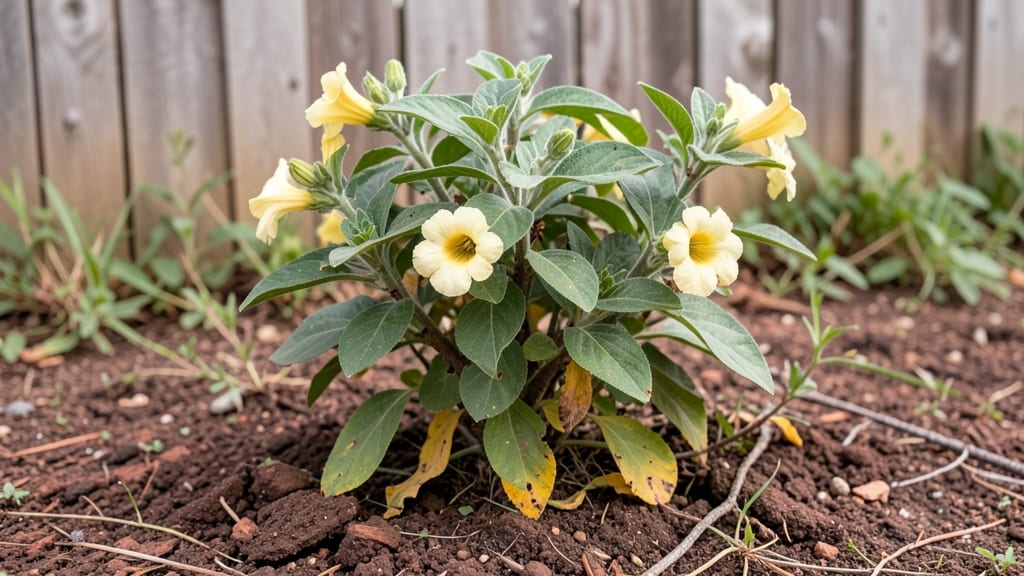
Four o'clock plants act as perennials only in frost-free zones like USDA 10-11, where their tuberous roots survive winter to regrow annually. In colder climates, they die back with frost and must be replanted each season.
This behavior comes down to their underground storage system—thick, fleshy roots packed with nutrients that let them bounce back when conditions are right. 🌱 In warmer regions, these roots stay dormant underground until spring, while northern gardeners often dig up tubers before frost and store them indoors.
The key difference? Perennial growth happens naturally in mild winters, but cooler areas need extra care to mimic that resilience.
For gardeners outside zones 10-11, the good news is that with proper overwintering techniques (like lifting tubers or using containers), you can effectively turn annuals into multi-year plants. The trade-off? More effort, but the payoff is seeing those signature trumpet-shaped blooms return year after year.
💡 In This Article
- Four O'Clock Plant Lifespan by Climate Zone
- Extending Four O'Clock Plant Growth in Cooler Regions
Four o'clock plant lifespan by climate zone
The four o'clock plant's perennial behavior hinges on its tuberous root system, which acts like a natural storage unit. In USDA zones 10-11, where winter temperatures rarely drop below 40°F, these roots remain dormant but viable underground.
The thick, fleshy tubers store starches and nutrients, allowing them to regenerate shoots when spring arrives. This is why they naturally behave as perennials in frost-free climates. 🌿
In contrast, USDA zones 7-9 experience occasional frost, which can damage or kill the above-ground growth. However, the roots may still survive if protected by mulch or soil insulation. Below zone 7, frost penetrates deeper, often killing even the tubers unless they're lifted and stored.
The critical threshold is 28°F—when temperatures drop this low for extended periods, the roots' cellular structure freezes and ruptures, preventing regrowth.
Here's what the numbers show: In zone 11, four o'clocks may live 5+ years with minimal care, while in zone 8, they typically survive 2-3 years if winters are mild.
The difference comes down to cumulative frost exposure—just 1-2 nights below 32°F can turn a perennial into an annual in marginal zones. 🥶
Root depth matters too. Four o'clock tubers grow 6-12 inches below soil, but their sensitivity to cold increases with shallower planting. In zone 6 or colder, gardeners often dig up tubers at first frost and store them in sand or peat moss at 50-55°F until spring.
This mimics the plant's natural survival strategy in its native tropical regions, where it evolved to avoid seasonal cold entirely.
The plant's scientific name, Mirabilis jalapa, hints at its tropical origins—"mirabilis" means "wonderful" in Latin, reflecting its striking evening-blooming flowers that open in shades of pink, yellow, and purple. This tropical heritage explains why it thrives as a perennial only where winters stay above 40°F consistently.
In cooler areas, its annual growth habit is a survival adaptation to temporary conditions. 🌸
For gardeners in zones 7-9, the boundary between perennial and annual behavior often comes down to microclimate. A sheltered spot near a south-facing wall might protect roots enough for multi-year growth, while exposed areas force annual replanting.
Testing soil temperature at 6 inches deep with a probe can reveal whether your zone truly supports perennial growth or if annual planting is safer. 🌡️
The key takeaway? Four o'clocks aren't "choosing" to be perennials or annuals—they're responding to temperature thresholds their roots can handle. Understanding these zones helps you decide whether to plant with perennial hopes or annual realism. 💡