
Flowers
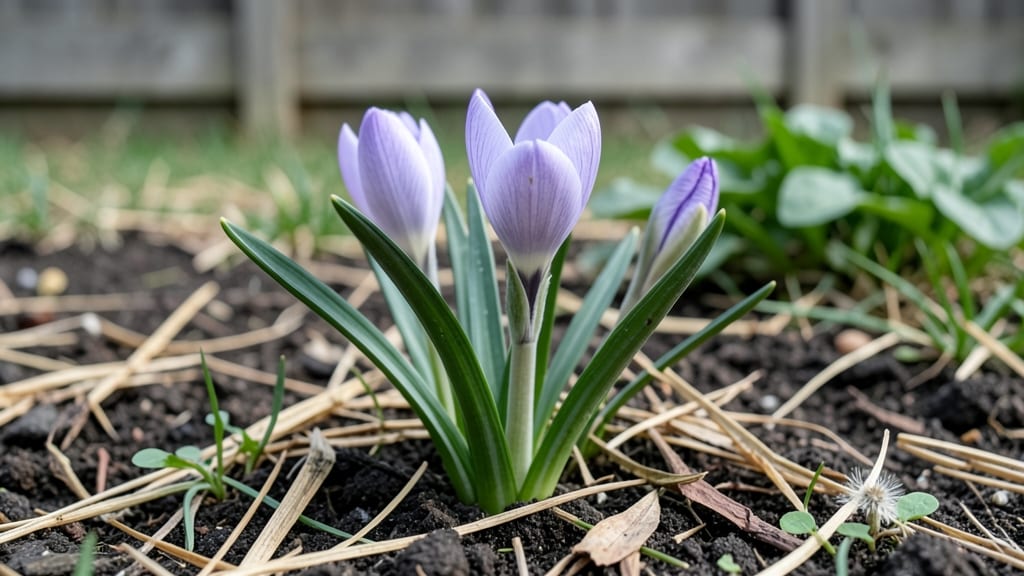
Yes, crocus plants are perennials that regrow annually with consistent care, though their green leaves typically wither after flowering. These hardy plants thrive by storing energy in underground corms, which can produce blooms for 5-10 years—or even longer—when planted in well-draining soil with full sunlight exposure.
Crocus perennials work differently than many garden plants because their life cycle hinges on those corms—think of them as natural storage units packed with nutrients. 🌱 After the above-ground foliage fades, the corm stays dormant underground until spring, when it sends up new shoots.
This built-in survival mechanism is why crocuses are among the first flowers to bloom in early spring, often pushing through snow. The key to their longevity lies in mimicking their natural habitat: well-drained soil prevents rot, while full sun ensures strong corm development for next year's blooms.
💡 In This Article
- How Crocus Corms Sustain Perennial Growth
- Seasonal Care Tips for Long-Term Crocus Success
How crocus corms sustain perennial growth
The secret to crocus perennials lies in their specialized underground storage organs called corms. Unlike bulbs (like tulips), which have layered scales, crocus corms are solid, tunicate structures packed with starches and proteins that serve as their energy reserve.
These corms can store enough nutrients to sustain the plant through dormancy and fuel rapid spring regrowth. Studies show that a mature crocus corm typically weighs between 0.5 to 2 ounces, with the larger varieties capable of producing multiple flower stems in a single season.
Here's what actually happens during their life cycle: After blooming, the foliage yellows and dies back, but the corm continues photosynthesizing through its green leaves for 4-6 weeks—this is critical for replenishing its energy stores.
Early-blooming varieties like Crocus vernus (Dutch crocus) complete this process by late spring, while late bloomers such as Crocus tommasinianus (woodland crocus) extend it into early summer.
The key difference is that early bloomers prioritize rapid energy storage to prepare for their shorter growing window, while late bloomers take their time in a cooler, more gradual environment.
Root depth plays a surprising role in their longevity. Most crocus varieties develop roots that extend 6-12 inches below the corm, anchoring them securely and accessing deeper moisture reserves.
This deep root system helps them survive drought conditions and prevents the corms from floating to the surface during heavy rains—a common cause of rot.
However, this also explains why some crocuses decline after 3-5 years: if planted too shallowly (2-3 inches depth), the corms become vulnerable to temperature fluctuations and fungal infections. The ideal planting depth is 4-6 inches, which balances stability with accessibility to sunlight for the emerging shoots.
Seasonal dormancy is where crocus corms truly shine in their survival strategy. During winter, these corms enter a state of metabolic dormancy where their respiration rate drops to nearly zero, conserving energy while remaining viable.
What most people don't realize is that crocus corms can actually regenerate during dormancy—a process called "cormlet formation." Tiny daughter corms (called cormlets) form on the sides of the parent corm, ensuring natural propagation. This explains why a single crocus planting can expand dramatically over time without any human intervention.
There's a fascinating biological trade-off between bloom size and corm longevity. Early-blooming varieties tend to produce smaller, more numerous flowers because they allocate more energy to corm replenishment.
Late-blooming varieties, however, can produce larger individual blooms (like the 3-inch flowers of Crocus speciosus) but require more consistent moisture to maintain their vigor. This is why some gardeners report that late-blooming crocuses may decline faster—they're more sensitive to summer drought conditions that prevent proper corm replenishment.
The science behind their perennial nature also involves hormone regulation. Crocus corms produce high levels of abscisic acid during dormancy, which suppresses growth while maintaining cellular integrity. This hormonal balance is what allows them to survive years of dormancy without decomposing.
When spring temperatures rise above 50°F, the corms break dormancy through a process called "thermoinduction," where warm soil triggers the production of gibberellins—hormones that promote shoot growth. 🌱