
Vegetables
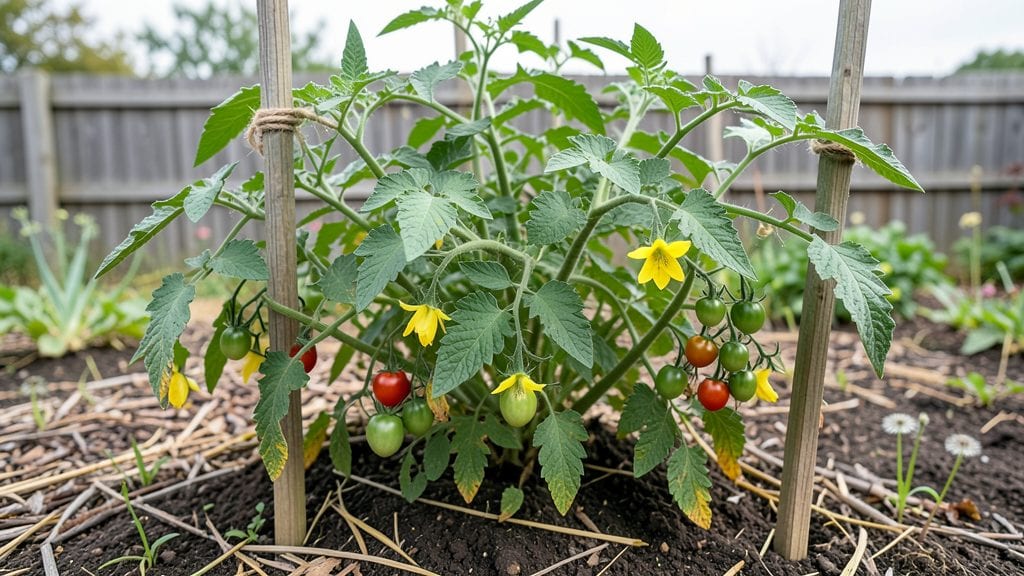
Cherry tomatoes are not perennials in most climates; they thrive as annuals in temperate zones but can survive multiple years in frost-free regions like USDA Zones 10-12 with proper winter care. Cold snaps will kill them in colder areas, requiring replanting each spring.
Cherry tomatoes behave like annuals because they can't tolerate frost—temperatures below 32°F (0°C) destroy their delicate cells, unlike hardy perennials such as asparagus or rhubarb. 🌱 In warmer climates, however, they can live for years if you protect them from winter chill with mulch or row covers.
The key difference lies in their genetic makeup: cherry tomatoes evolved as tender plants, not cold-resistant survivors.
What many gardeners don't realize is that even in mild winters, these plants need consistent care to persist. Pruning aggressively in late fall and using thick mulch layers can help roots survive, but they'll still produce less reliably than true perennials.
For those in colder zones, treating them as annuals actually saves effort—replanting fresh starts each spring guarantees stronger, more productive vines.
💡 In This Article
- Why Cherry Tomatoes Die in Cold Climates
- Extending Cherry Tomato Lifespan in Warm Regions
Why cherry tomatoes die in cold climates
Cherry tomatoes meet their demise in cold climates because their cells lack the protective mechanisms of true perennials. When temperatures drop below 32°F (0°C), ice crystals form inside their plant tissues, rupturing cell walls like glass shattering.
This process, called cryodamage, triggers a cascade of cellular breakdown that's irreversible. Unlike hardy perennials like asparagus (which can survive -20°F/-29°C), cherry tomatoes evolved in tropical regions where such cold never existed.
The key difference lies in their freeze tolerance threshold. Most cherry tomato varieties can handle brief exposures to 28-32°F (-2 to 0°C), but prolonged cold or sudden freezes push them past their limit.
Even a light frost (30-32°F/-1 to 0°C) weakens vines, causing leaves to blacken and stems to become mushy. True perennials like eggplants or peppers have thicker cell walls and specialized proteins that prevent ice formation, while tomatoes lack these adaptations entirely.
What's fascinating is how quickly this damage occurs. Within 1-2 hours of exposure to 25°F (-4°C), cherry tomato plants show visible wilting. The roots, being the most sensitive part, begin to rot at 30°F (-1°C), cutting off the plant's water supply.
This is why gardeners in Zone 5 or colder must treat them as annuals—replanting each spring is the only reliable way to guarantee a harvest, as even well-established plants won't recover from winter cold.
For comparison, consider Solanum lycopersicum (regular tomatoes) vs. Solanum lycopersicum var. cerasiforme (cherry tomatoes). While both share similar cold sensitivity, cherry varieties often suffer more because their smaller size means less thermal mass to retain heat.
Their thin stems also conduct cold more efficiently than thicker tomato stalks. This biological limitation explains why you'll never see cherry tomatoes thriving as perennials in cold climates—it's not just about care, but fundamental plant physiology.
Here's what happens at the cellular level: Cold temperatures cause water in tomato cells to expand as it freezes, rupturing membranes and killing organelles. Unlike hardy plants that produce antifreeze proteins, cherry tomatoes have no such defense.
Even if the above-ground parts die back, the roots rarely survive to regrow in spring, unlike true perennials that can regenerate from dormant buds underground. 🌱
The only exception is in USDA Zones 10-12, where winter temperatures rarely drop below 40°F (4°C). Here, cherry tomatoes can persist for years if protected from wind chill and given consistent moisture.
But this requires active management—most gardeners in colder zones find annual replanting simpler and more productive than attempting to overwinter delicate tomato varieties.