
Vegetables
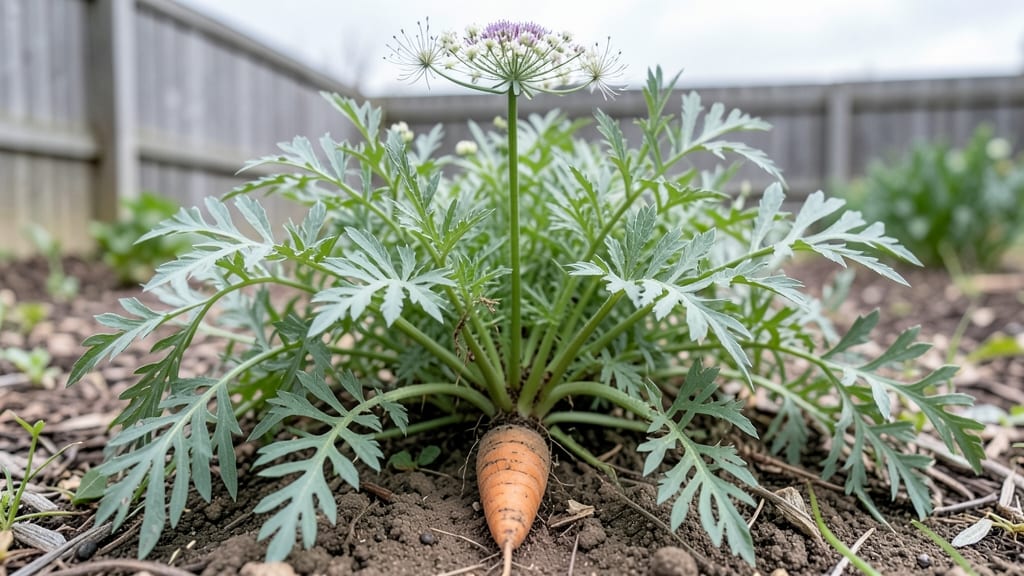
Carrots aren't perennials—they're biennial plants that develop edible roots in their first growing season and flower in the second. After harvest, their main roots deteriorate, forcing gardeners to replant them yearly.
This two-stage growth pattern explains why most gardeners treat carrots as annuals, even though they technically follow a biennial cycle. 🌱 The confusion stems from their behavior: in colder climates, carrots left in the ground may survive winter but rarely produce edible roots again, making them function like annuals.
Even in ideal conditions, their storage life is limited compared to true perennials like asparagus or rhubarb, which regrow from the same root system year after year.
What's fascinating is how gardeners work around this limitation. By using techniques like staggered planting or overwintering strategies, you can effectively create a continuous harvest that mimics perennial behavior.
This approach lets you enjoy fresh carrots for months without replanting, though the plants themselves never truly return in the same way.
💡 In This Article
- Carrot Plant Life Cycle: Annual vs Biennial Growth Explained
- How to Extend Carrot Harvests Like a Perennial Crop
Carrot plant life cycle: annual vs biennial growth explained
Carrots belong to the biennial plant category, meaning they complete their life cycle in two years rather than one. In their first year, all energy focuses on developing the thick, edible taproot we harvest—typically reaching 6-12 inches in length by fall.
This root acts as a storage organ, accumulating sugars and starches that give carrots their sweet flavor. The plant's leaves continue photosynthesizing to fuel this growth, often forming a dense rosette that can reach 12-18 inches in diameter.
Here's what happens in year two: when exposed to cold temperatures (40°F or lower), carrots trigger a hormonal shift that signals flowering. The taproot begins producing a flowering stalk that can grow 2-3 feet tall, with small white flowers containing seeds.
This process is called vernalization—similar to how winter wheat needs cold exposure to flower. The original taproot often shrivels as energy shifts to seed production, which is why gardeners rarely let carrots go to seed in home gardens.
The biennial classification explains why gardeners treat carrots as annuals. After harvest, the taproot system deteriorates completely—unlike true perennials (such as asparagus) that regrow from rhizomes. Even if left in the ground over winter, most carrot varieties won't produce edible roots again.
The only exception is certain heirloom varieties that can survive mild winters and regrow, but their second-year roots are usually small and woody. This makes carrots functionally annual in most climates.
What makes this cycle fascinating is the botanical trade-off: carrots prioritize either storage (first year) or reproduction (second year). This dual-purpose growth explains why wild carrot plants (Queen Anne's lace) produce tiny, inedible roots compared to cultivated varieties.
Gardeners exploit this by harvesting before the flowering stage begins—typically between 60-80 days after planting, depending on the variety. The sweetness peak occurs when roots store maximum sugars before winter.
Climate plays a crucial role in this behavior. In tropical regions where temperatures stay above 60°F year-round, carrots may never flower and instead continue growing vegetatively. This is why some tropical varieties produce edible roots for multiple years under ideal conditions.
However, in temperate zones, the biennial cycle dominates, forcing gardeners to replant annually for consistent harvests. 🌿
The distinction between biennial and annual becomes clearer when comparing to true perennials like rhubarb. While carrots die back after harvest, rhubarb's thick roots (corms) remain dormant underground, ready to regrow from the same system.
Carrots lack this persistent structure, which is why they can't be treated as perennials in standard gardening practice.