
How To
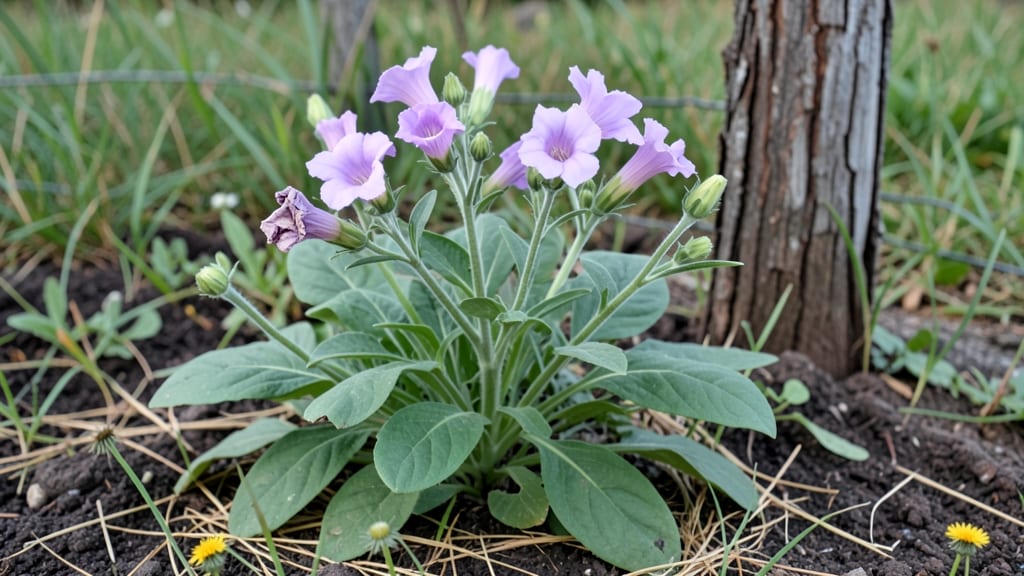
Four o'clocks (Mirabilis jalapa) aren't perennials in most regions because they can't survive freezing temperatures, though some varieties might regrow from roots in warmer climates (USDA zones 9-11). Their seasonal dormancy and frost sensitivity make them behave more like tender annuals or short-lived perennials.
These plants thrive as annuals in cooler climates because their above-ground growth dies back completely when temperatures drop below 30°F. 💫 However, their deep root systems sometimes persist underground, allowing regrowth when conditions warm again—this is why some gardeners consider them "self-seeding perennials" in mild winters.
The key difference from true perennials (like lavender) lies in their inability to sustain foliage through freezing winters, which forces them to rely on root reserves for survival.
In practice, this means you'll often see four o'clocks treated as annuals in northern gardens, while southern growers can enjoy their vibrant blooms year after year with minimal effort.
The plant's adaptability makes it a favorite for both container gardens (where you can bring pots indoors) and in-ground plantings with protective mulch layers.
💡 In This Article
- Understanding Four O’Clock Plant Cold Hardiness Zones
- Tips for Overwintering Four O’Clock Plants
Understanding four o’clock plant cold hardiness zones
The cold sensitivity of four o'clocks (Mirabilis jalapa) stems from their tropical origins in South America, where they evolved in warm, frost-free environments.
Their above-ground growth contains delicate cell structures that rupture when exposed to temperatures below 30°F, a threshold far milder than what true perennials like lavender (which survives -15°F) or salvia (down to 10°F) endure.
The plant’s survival strategy relies entirely on its deep, fibrous root system—capable of storing enough energy to regenerate foliage when temperatures rise again in spring.
Here’s what happens at the cellular level: frost causes ice crystals to form in the plant’s vascular tissues, disrupting water transport and causing irreversible damage to leaves and stems. However, the roots contain specialized cells that can remain dormant and protect critical growth centers.
This is why you might see four o'clocks resprouting from the same spot year after year in USDA zones 9-11—their roots survive, but the tops don’t. In contrast, hardy perennials like lavender have evolved thick, woody stems and deep taproots that insulate against freezing, allowing them to regrow from the crown each season.
The key difference lies in their growth habit: four o'clocks are geophytes, meaning they store energy underground to regrow, while true perennials maintain above-ground structures year-round. For example, salvia’s woody stems act as insulation, while four o'clocks rely on their roots to "remember" where to grow back.
This makes them behave like short-lived perennials in ideal climates but act as annuals in colder regions where roots fail to persist.
What most gardeners don’t realize is that even in mild winters, four o'clocks often die back completely—not just the tops. Without protective measures like thick mulch (4-6 inches of straw or leaves), the roots themselves can suffer from prolonged cold or wet soil.
This is why they’re rarely considered true perennials: their survival depends on both climate and human intervention, unlike hardy plants that thrive without assistance.
For comparison, consider how a USDA zone 8 winter (where lows reach 10-15°F) would affect four o'clocks: their roots might survive, but the tops would crisp, forcing them to rely on seed germination rather than regrowth.
True perennials in this zone, like Russian sage, simply leaf out again from protected crowns. The four o'clock’s reliance on root reserves makes it a tender perennial—a category that includes plants like hibiscus, which also need winter protection to persist.
In practice, this means gardeners in zone 7 or colder should treat four o'clocks as annuals, while those in zones 9-11 can enjoy their self-seeding nature.
The plant’s adaptability is its charm, but understanding these biological limits helps explain why they’re often misclassified as perennials—especially when they resprout unexpectedly in mild winters. 🌱