
Orchid Care
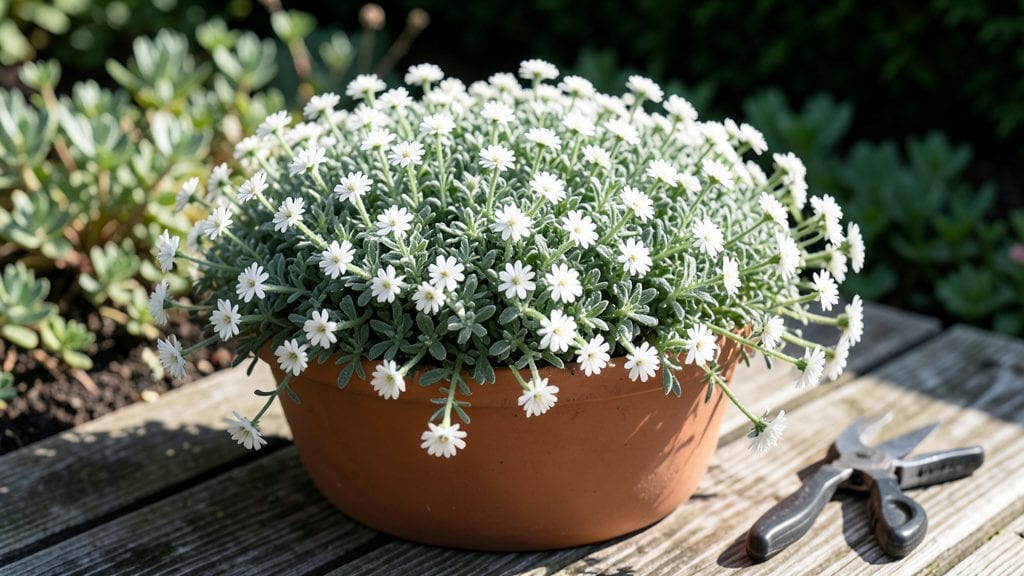
Alyssum 'Carpet of Snow' is classified as an annual because its growth is triggered by cool temperatures, which it needs to thrive.
Once summer heat arrives, the plant naturally declines, but its seeds often germinate the following fall. 🌱 This self-seeding habit is why many gardeners mistake it for a perennial—it keeps returning year after year without replanting.
The key difference lies in its inability to survive winter frost in colder regions, where it must be replanted annually.
In warmer climates, this trait becomes an advantage. The plant's resilience and ability to spread make it a low-maintenance ground cover that blooms continuously from early spring until frost.
I've seen it transform bare spots into lush, fragrant carpets with minimal effort, especially when paired with other cool-season flowers like violas or pansies.
💡 In This Article
- Understanding Alyssum 'Carpet of Snow' Growth Habits
- Tips for Extending Alyssum Blooms Year-Round
Understanding alyssum 'Carpet of Snow' growth habits
Alyssum 'Carpet of Snow' behaves as an annual because its life cycle is tightly linked to temperature cues. This cool-season plant germinates best when soil temperatures drop below 70°F—typically in early spring or fall—triggering a biological response called vernalization.
This process prepares the plant for flowering by signaling it to produce blooms rather than just foliage, a mechanism similar to how some biennials behave.
The key difference from true perennials is that 'Carpet of Snow' lacks the root systems or dormant buds to survive winter frosts below 20°F, which would kill its above-ground growth entirely.
The plant's frost sensitivity explains why it thrives in USDA zones 5-10 but behaves differently in each. In colder regions (zones 5-7), it completes its entire life cycle in one season: germination, flowering, seed production, and then death when summer heat arrives.
In warmer zones (8-10), the seeds often germinate in fall, grow through winter, and bloom in early spring—creating that perennial-like appearance. What's fascinating is how the seeds enter a natural dormancy period when exposed to 50-60°F temperatures, waiting for ideal conditions to sprout again.
This dormancy is what allows the plant to persist year after year without human intervention.
Comparing its growth stages to true perennials reveals critical differences. Perennials like lavender or hostas develop woody stems or underground rhizomes that store energy and regrow annually. 'Carpet of Snow' has none of these structures—instead, it relies entirely on seed production.
Each plant produces 500-1,000 seeds per flowering cycle, which scatter and germinate when conditions are right. This prolific seeding explains why gardeners often see it return without replanting, even though it's technically an annual.
The trade-off is that each generation starts fresh, meaning the plants are always young and vigorous during their single growing season.
Temperature fluctuations also influence its growth patterns in surprising ways. For example, in coastal climates with mild winters, the plant may produce multiple flowering cycles in one season if temperatures stay below 75°F.
The flowers themselves are sensitive to heat—their sweet, honey-like fragrance intensifies in cooler weather (below 80°F)) but becomes less pronounced in summer heat. This is why the plant often looks its best in spring and fall, aligning with its natural annual life cycle.
The contrast with perennials is striking: while perennials like peonies build strength over years, 'Carpet of Snow' puts all its energy into rapid growth and reproduction within a single season.
What most gardeners don't realize is how this growth habit makes it an excellent ecological adapter. The plant's ability to self-seed ensures it won't disappear from a garden, even if the parent plants die back. In wild settings, this trait helps it colonize disturbed areas quickly.
The seeds can remain viable in the soil for 2-3 years, waiting for the perfect moment to sprout. This resilience explains why it's often found in meadows and roadsides—it's not just surviving, but strategically positioning itself for future growth opportunities.
For those curious about its texture, the leaves are covered in fine, silvery hairs that give them a velvety appearance, while the flowers form dense clusters that create a carpet-like effect when mature.
This physical structure helps protect the plant from pests and retains moisture, which is crucial during its brief but intense growing period.
The contrast with true perennials couldn't be more different—where perennials might develop woody stems or thick roots, 'Carpet of Snow' invests everything in its above-ground growth and seed production within a single season. 🌸